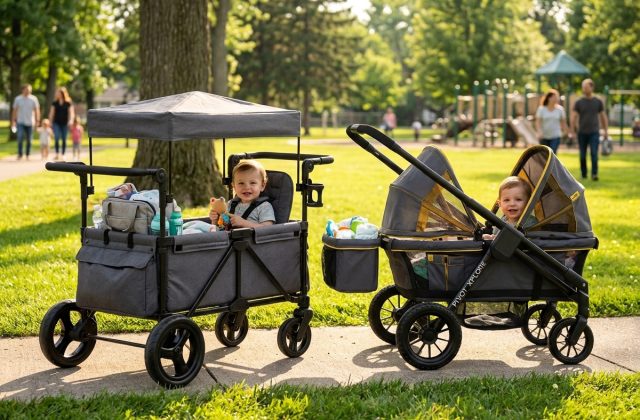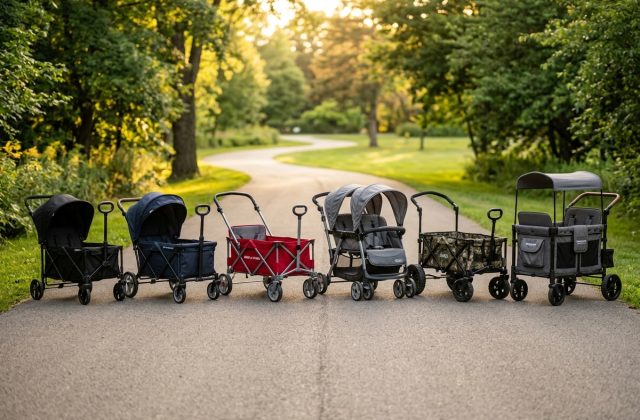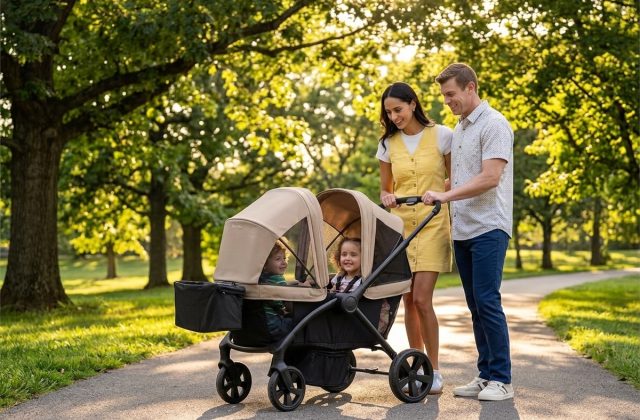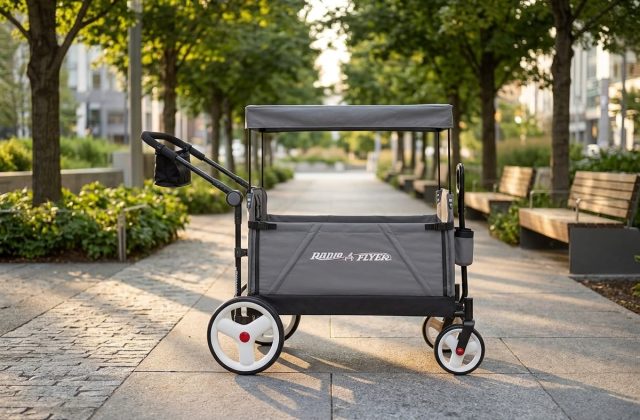
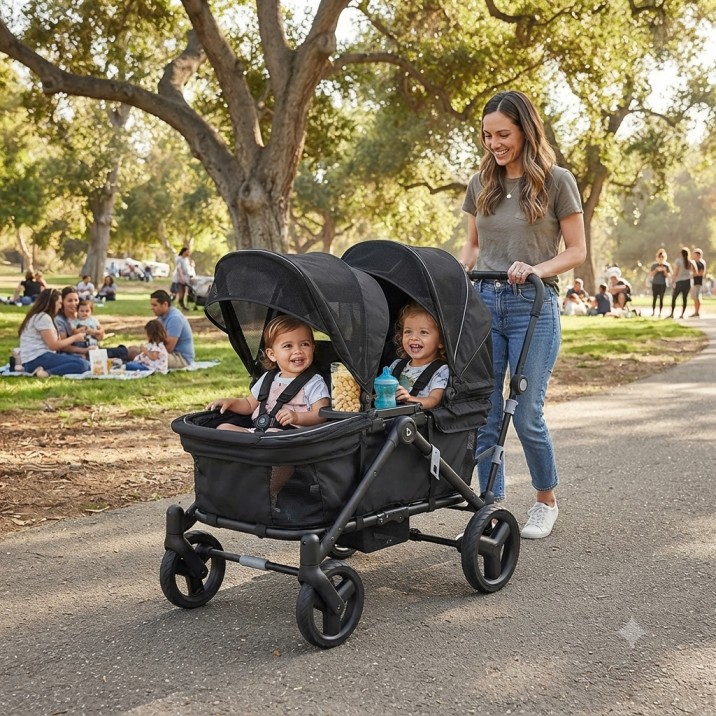
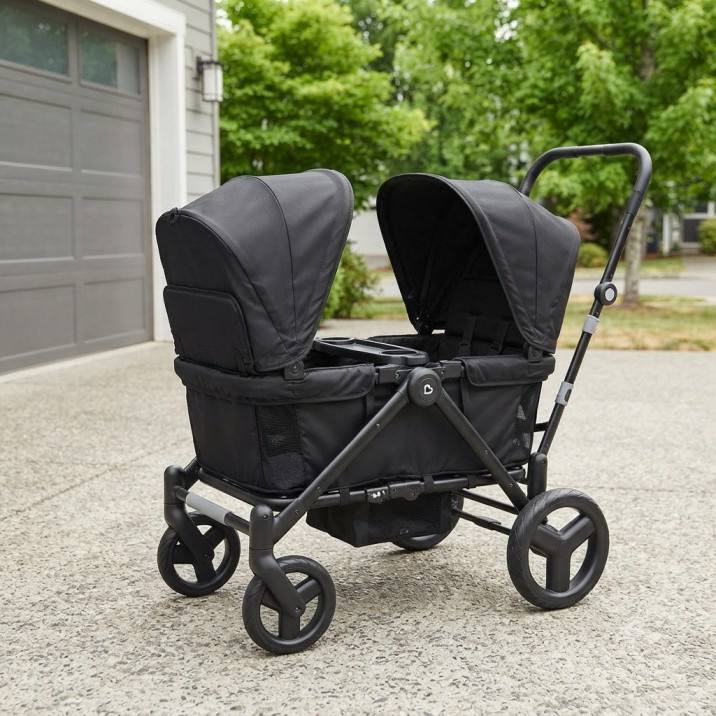
Most stroller wagons get heavy because they’re trying to do everything at once: bigger wheels, sturdier frames, more storage, sometimes reclining seats, and sometimes car seat compatibility too. The Munchkin Ultra-Lite goes the other way. It’s a much lighter 2-seat stroller wagon built around one main selling point: it’s easier to lift, easier to fold, and less of a pain to fit in the trunk than most of the competition.
That’s what makes it interesting. At 28.4 pounds, it’s one of the few stroller wagons that actually feels realistic for parents who are tired of wrestling a 35- to 45-pound frame in and out of the car. The tradeoff is that Munchkin got the weight down by leaving some things out. So the real question isn’t just whether it’s light — it’s whether the missing stuff matters for how your family would actually use it.
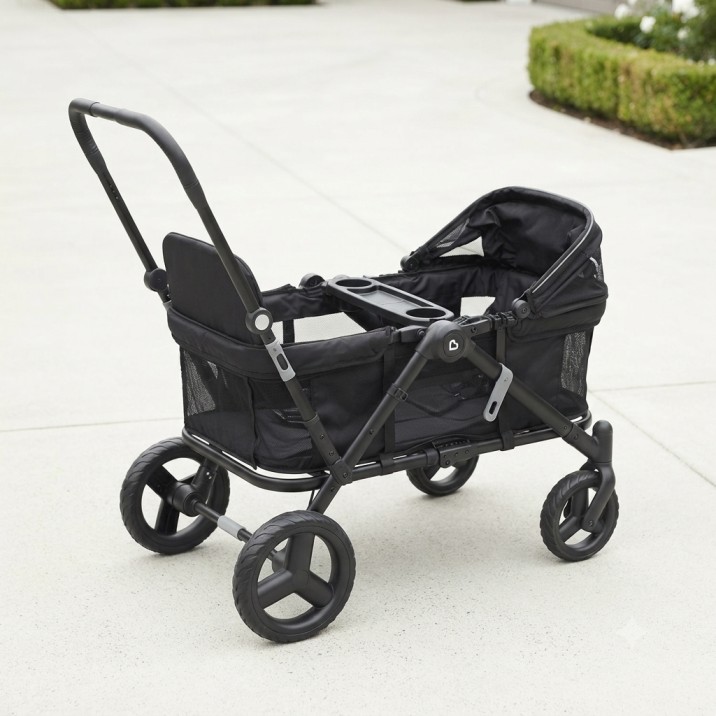
What it actually is
| Feature | Details |
|---|---|
| Weight | 28.4 lbs (marketed as “under 30 lbs,” about 25% lighter than most 2-seat wagons) |
| Seating | 2 children, each up to 55 lbs and 41″ |
| Total weight capacity | 110 lbs combined (kids + cargo) |
| Minimum age | 6 months |
| Harness | Two 3-point harnesses |
| Canopy | Two independent collapsible/removable canopies, UPF 50+ |
| Storage | Removable snack tray with cup holders, side pockets, footwell |
| Car seat adapter | Not offered |
| Assembly | No tools required |
| Price | $299.99 at Munchkin.com; regularly discounted to roughly $170–$230 at Target, Walmart, and Amazon |
That price gap between the Munchkin site and everywhere else is worth knowing about before you pay full price anywhere. This wagon rarely sells at MSRP outside Munchkin’s own store.
The weight number is the real story here
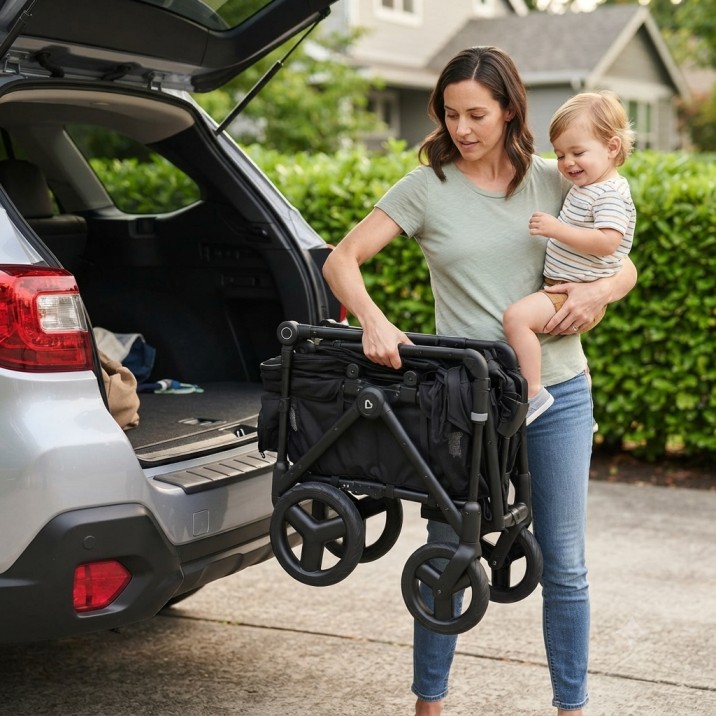
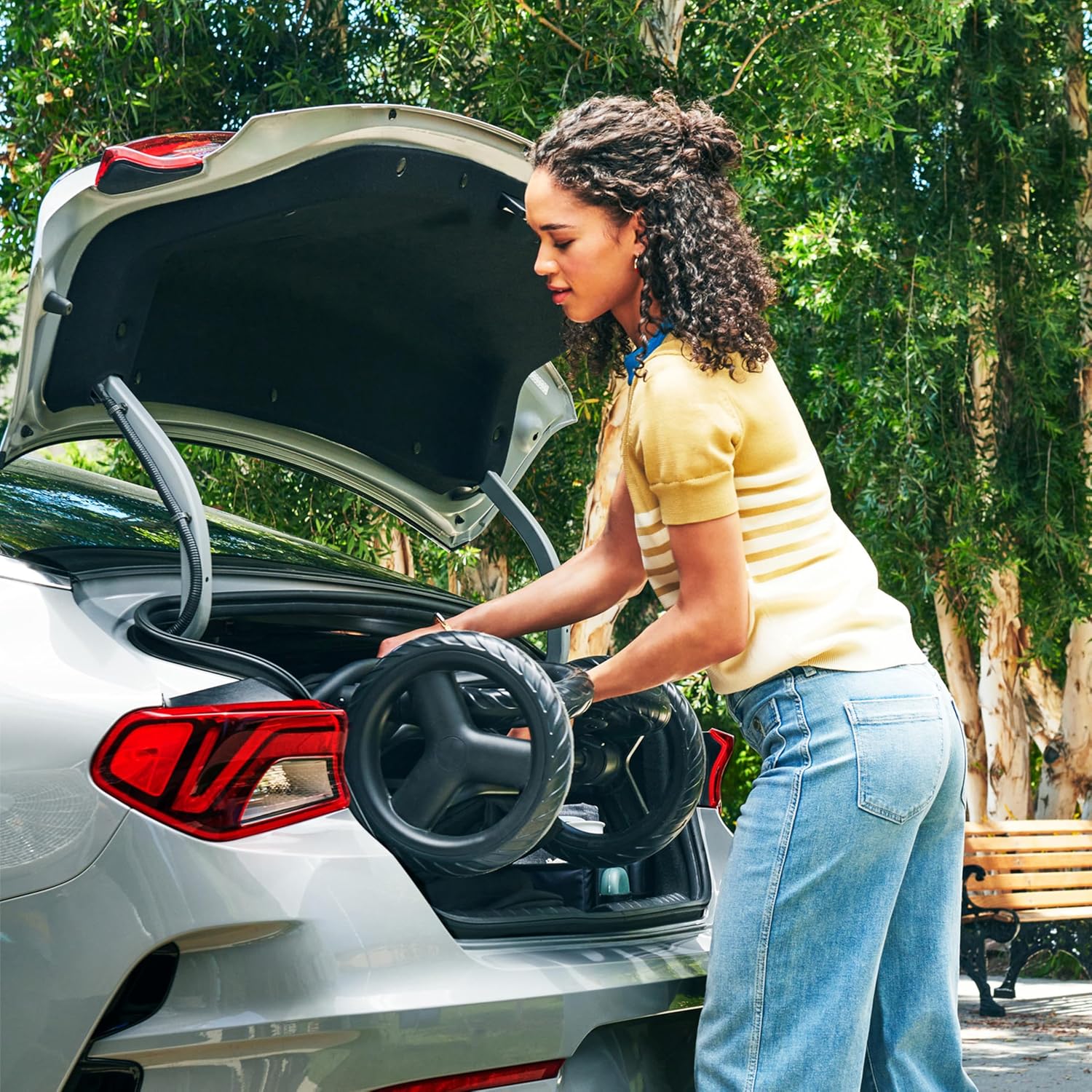
Twenty-eight pounds sounds like a marketing bullet point until you’ve actually hauled a 35-plus-pound wagon up porch steps or wedged one into a small trunk next to a stroller, a diaper bag, and groceries. That’s the gap Munchkin is closing. A handful of TikTok reviewers who own heavier wagons alongside this one describe it as folding down close to the size of a compact umbrella stroller — small enough to fit where a full-size wagon wouldn’t.
The lighter weight has to come from somewhere, and part of that tradeoff is the frame. A wagon like the Wonderfold W2 uses a heavier build because it’s meant to handle years of constant loading, curb bumps, and regular wear without feeling flimsy. The Munchkin is clearly aiming at a different buyer. It makes more sense as a lighter-duty wagon for families who care more about easy lifting and compact storage than maximum long-term durability. If you expect to use a stroller wagon hard for years across multiple kids, it’s worth reading our Wonderfold W2 Luxe review too, because that’s the kind of use case where the heavier frame starts to make more sense.
Where the ride quality gets uneven
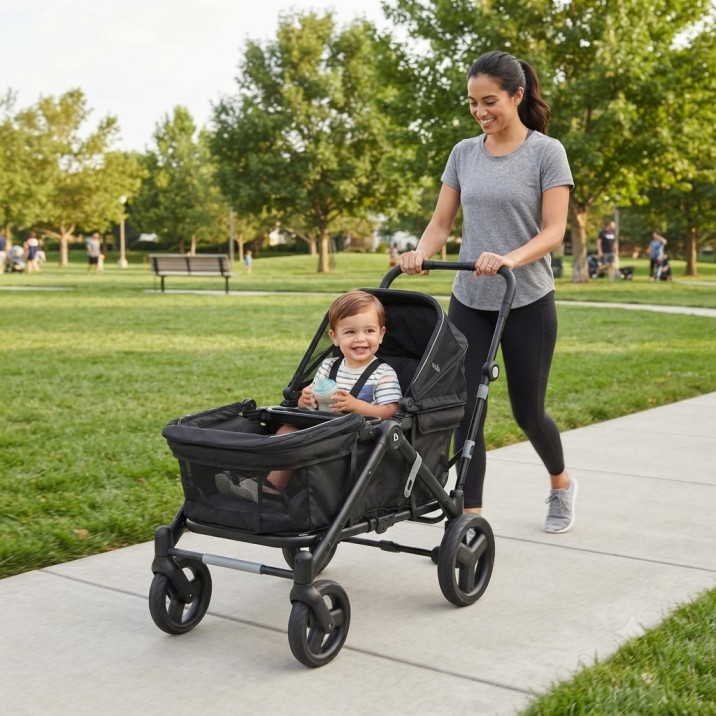
Munchkin markets “all-terrain wheels” that supposedly handle sand and snow, and on flat pavement and grass, owners generally describe a smooth, easy push. But at least one detailed owner review posted on Walmart’s own product page flags something worth taking seriously: the larger wheels sit at the back of the wagon, near the handle, rather than up front — and that reviewer specifically called handling “tricky” as a result, along with needing to make wider turns than expected. That’s a fairly specific complaint, not vague dissatisfaction, and it lines up with how a rear-heavy wheel layout would behave if you’re trying to pivot the wagon in a tight parking lot or around a crowded playground path.
That doesn’t mean it’s hard to push in normal everyday use. Most owners seem happy with it on pavement, smoother park paths, and basic grass. The bigger question is what happens once you’ve got two kids inside and you need to turn it around in a tight aisle, parking lot, or crowded walking path. That’s where wheel layout matters more than the “all-terrain” label. I also wouldn’t assume beach performance just because the product page mentions sand. If beach trips are a big part of why you’re shopping, it’s worth cross-checking wheel setups in our best beach wagons for kids guide before treating this like a true beach wagon.
Two independent canopies is a nicer detail than it sounds
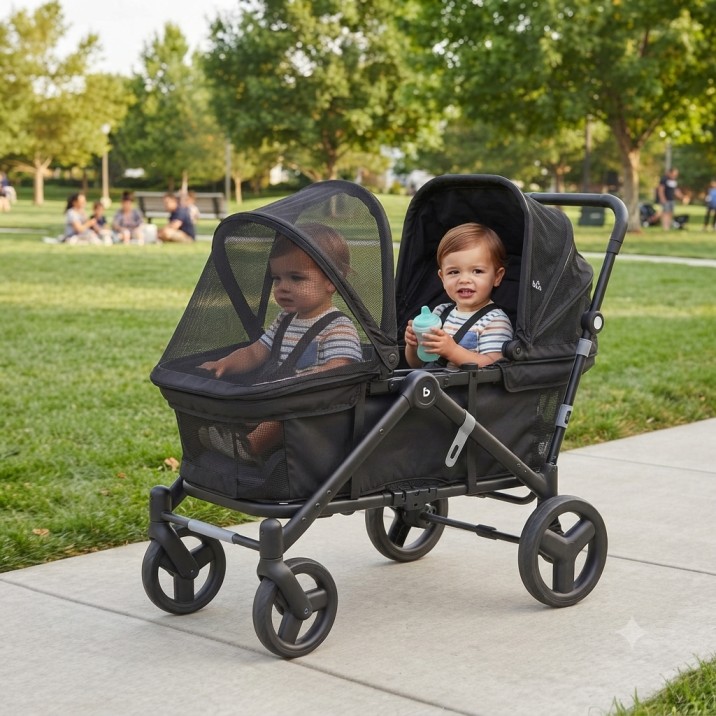
Most 2-seat wagons at this price point give you one shared canopy stretched over both kids, which sounds fine until one kid wants shade and the other wants sun, or you’re trying to angle one panel against a low afternoon sun without blocking your own view of both seats. Munchkin gives each seat its own collapsible, removable canopy rated UPF 50+, and you can adjust or fully remove either one independently. That’s a small thing that shows up more in daily use than in a spec comparison — a napping toddler on one side and a kid who wants to see the world on the other is a genuinely common split, and most wagons in this price range don’t let you solve for both at once.
The tradeoff, per more than one owner comment, is that the canopies themselves run a little small — enough to cover a seated toddler’s head and shoulders, not enough to fully shade a taller kid or block low-angle sun during a late-afternoon walk. Fine for a quick errand or a shaded park path. Less fine if you’re planning to park the wagon at a sunny sports field for two hours with no other shade around.
Two kids, two harnesses, and not much else
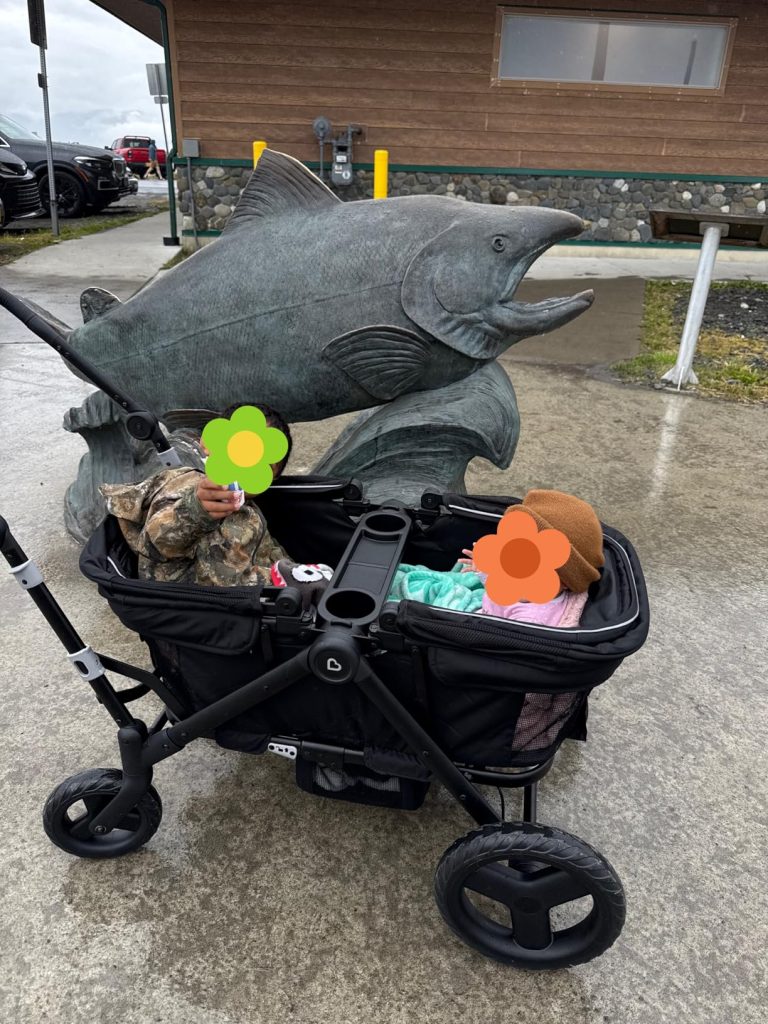
The seating setup is simple by design: two bench-style seats, each with its own 3-point harness, each rated to 55 pounds and 41 inches. That’s a reasonable ceiling for most toddlers and younger preschoolers, though families with a bigger 4-year-old will bump into the height limit before the weight one. There’s no recline, no adjustable legroom beyond the built-in footwell, and no ability to reconfigure the seats into a cargo mode the way pricier wagons let you fold benches away for gear. What you see is what you get — two kids, sitting upright, side facing forward.
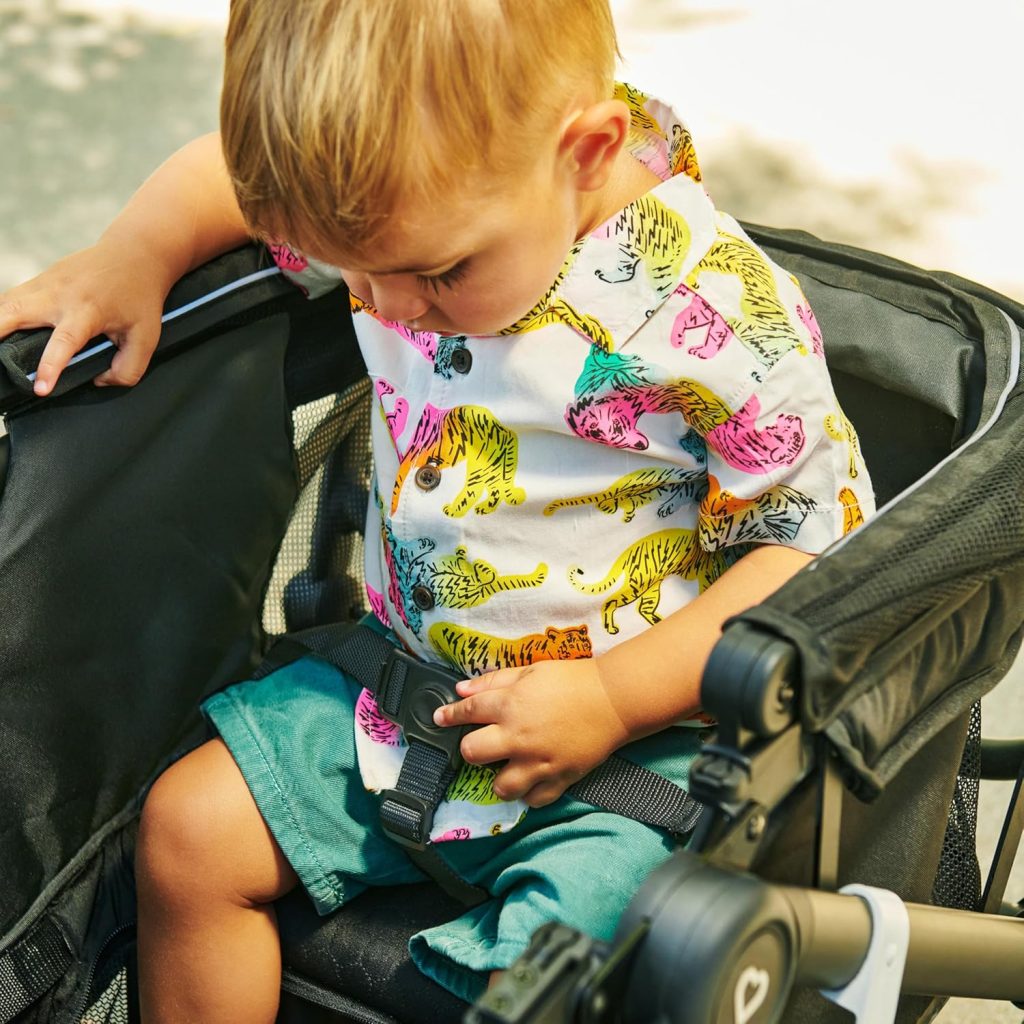
That simplicity cuts both ways. It’s part of why the wagon stays light and cheap to make. It also means there’s no upgrade path if your needs change — no seat swap for an infant car seat, no bench removal for a cooler and beach gear, no accessory ecosystem beyond the tray and canopy that ship in the box.
No car seat adapter, and that matters more than it sounds
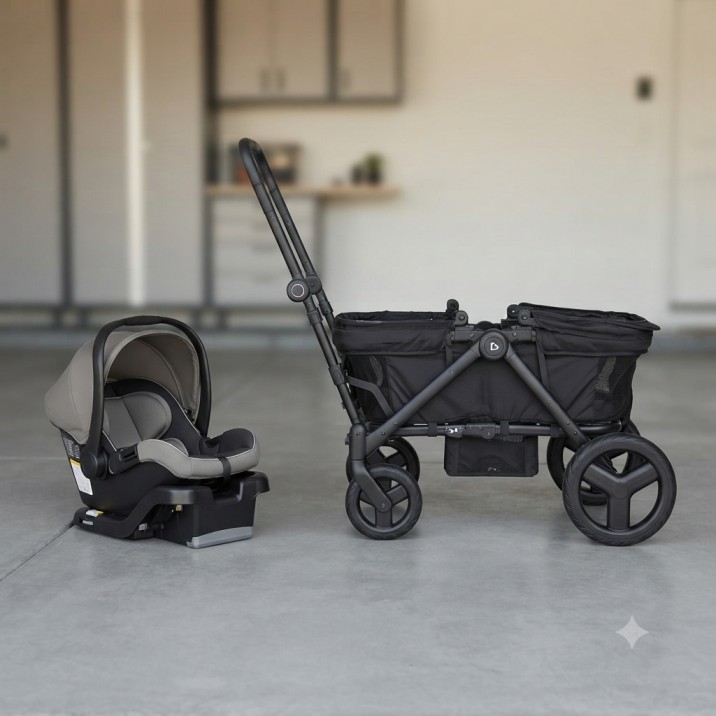
If you’ve shopped this category at all, you’ve probably noticed that brands like Wonderfold, Keenz, and Veer sell separate car seat adapters that let an infant seat click onto the wagon frame, extending usefulness down to newborn age. Munchkin doesn’t offer one for this wagon, and there’s no indication one is coming. The stated minimum age is 6 months, and that’s a hard floor — there’s no accessory path around it.
For families who already own an infant travel system and plan to switch to the wagon once the baby can sit up on their own, this isn’t really a loss. But if part of your reasoning for a stroller wagon was “one piece of gear that works from birth,” this isn’t that wagon, and no amount of aftermarket searching is going to change it. Worth knowing that going in rather than discovering it after the fact.
The fold is compact, but the latch takes getting used to
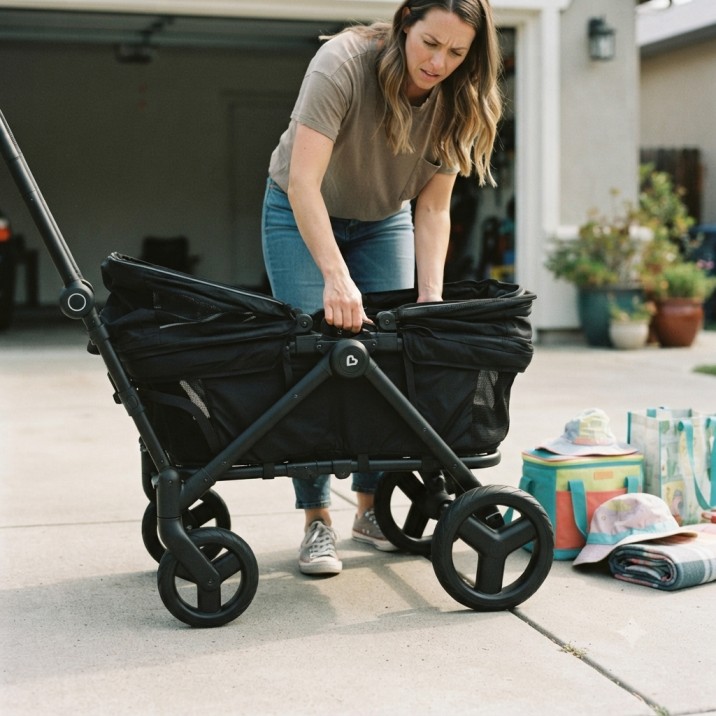
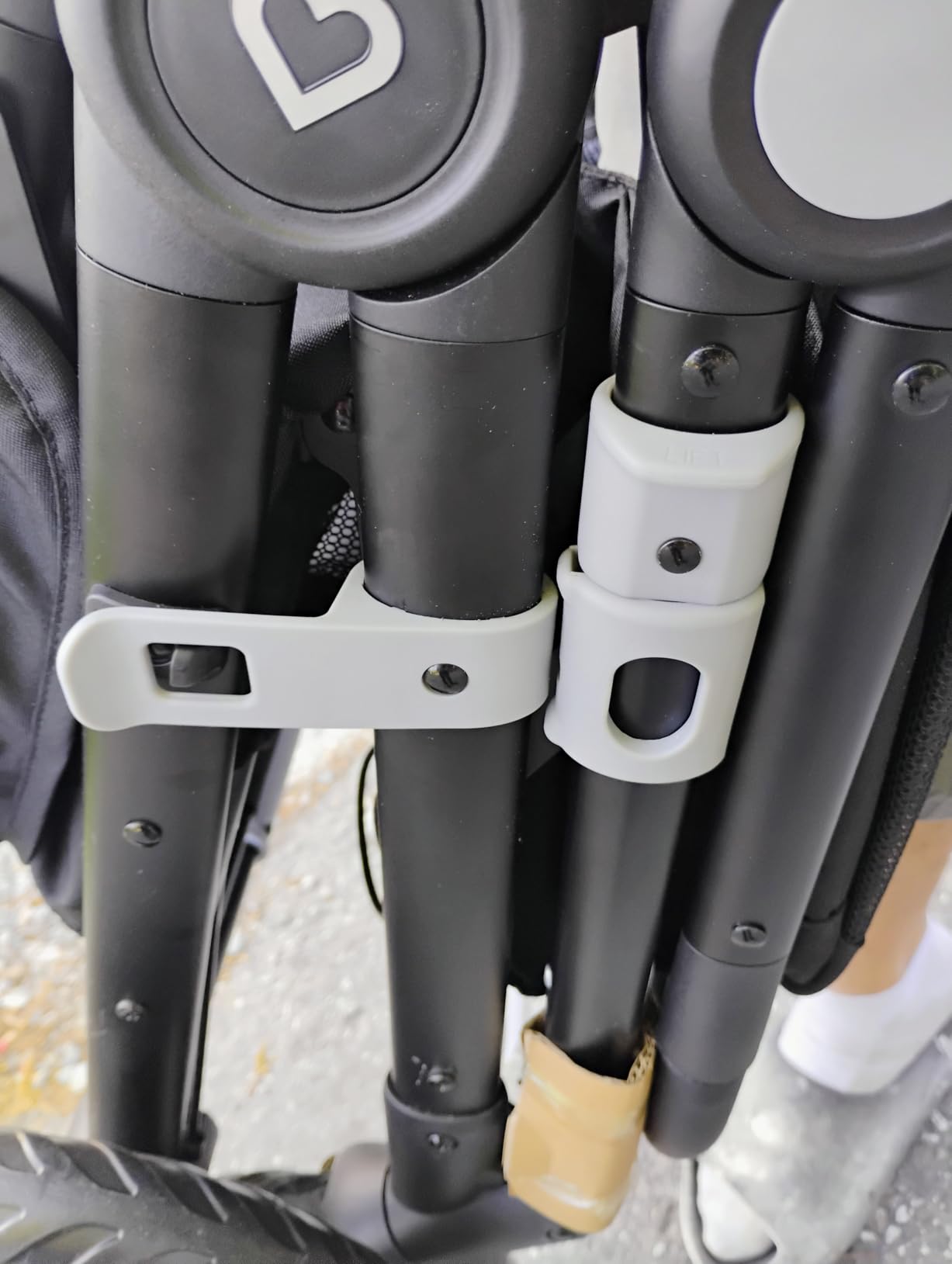
The compact fold is one of the biggest reasons to consider this wagon in the first place, especially if trunk space is tight. But a few owner reviews mention that the fold lock can be fussier than expected, so don’t expect a perfect one-try fold every time right out of the box. That matters more if you’re folding it in a parking lot while also trying to keep a toddler from wandering off. It doesn’t sound like a major flaw, just one of those small annoyances you’ll probably figure out after a few uses rather than on day one.
Storage is the other place where the lightweight design starts to show its limits. You get the removable snack tray with cup holders, plus side pockets, but there isn’t a real cargo basket underneath like you get on some sturdier wagons. For a quick park trip or a short errand, that may be enough. For a longer outing with two kids, snacks, extra clothes, wipes, and a diaper bag, it’s easier to run out of room than the product photos make it seem.
Where it lands against a double stroller
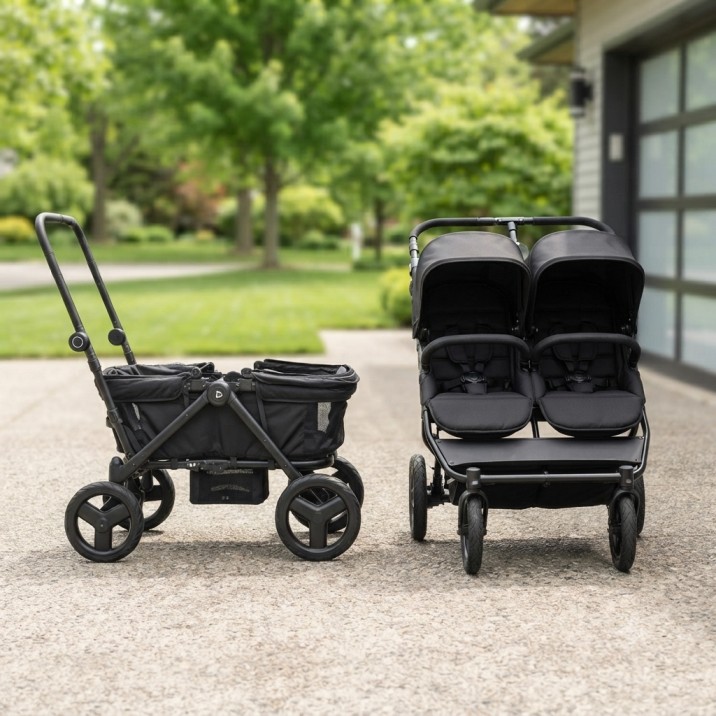
A lot of the appeal here makes more sense if you stop comparing it to heavy-duty wagons and start comparing it to lightweight double strollers. That’s probably the better frame of reference. At under 30 pounds with a compact fold, it feels closer to a double stroller that happens to use a wagon-style bench layout than to something like a Wonderfold or Radio Flyer that’s built for heavier hauling. If you’re genuinely stuck between those two formats, our double stroller vs. wagon stroller guide is a better place to start than a spec-sheet comparison, because the real differences show up in everyday use, not just in listed features.
What the price actually buys you
At the $170–$230 street price most retailers sell it for, this is one of the more affordable two-seat wagons with real safety harnesses and a genuine compact fold — cheaper than a Wonderfold W2, cheaper than most Keenz models, and priced closer to a mid-range double stroller than to the premium end of the wagon category.
At the full $299.99 list price on Munchkin’s own site, it gets harder to recommend, because that puts it close to wagons that give you a sturdier frame, more cargo room, and in some cases car seat compatibility too. If you’re going to buy this one, buy it on sale — full retail is not where it earns its keep. Our is a stroller wagon worth it guide is worth a read if you’re still deciding whether any wagon makes sense for your family before narrowing down to a specific model, since the answer depends more on how you’ll actually use it than on which brand you land on.
Who should actually buy this one
If your main frustration with wagons is that they’re too big, too heavy, and don’t fit in your trunk without a fight, this solves that problem better than almost anything else on the market right now. It’s the wagon to grab if you’re hauling it in and out of a small car multiple times a week, flying with it, or just tired of wrestling a 40-pound frame up a flight of stairs.

Skip it if you need an infant-ready setup from day one, if your kids are rougher on gear than average and you want something built to take a beating for years, or if cargo space for a full beach or sports-practice haul matters as much as seating two kids. For those situations, spend the extra money and weight on something like the W2 or a Keenz model built for that kind of daily grind — you’ll notice the difference in trunk space every single time you load it, but you’ll also stop noticing the wagon’s limits, which is worth more once the novelty of “it’s so light” wears off.
There’s also a middle-ground buyer here: the parent who wants a stroller wagon mostly for occasional use rather than everyday heavy use. Think once-a-week park trips, farmers market runs, zoo days, or something that mostly lives in the trunk until you need it. That’s probably where this wagon makes the most sense. If you’re not planning to put it through daily abuse, the lighter frame is a lot easier to live with and the durability compromises matter less. In that kind of use case, buying this one on sale makes more sense than paying extra for a heavier wagon built for a workload you may never actually put it through.