The Familidoo Q1 is a single-seat wagon that also works as a stroller, a cargo cart, and for some families, a pet carrier. That’s the whole pitch, and it’s why it’s been showing up everywhere lately — parents with toddlers who hate sitting still in a regular stroller started sharing it, and it caught on from there.
Short version: if your kid resists sitting still in a normal stroller, or you just want one wagon that handles park trips, errands, and the occasional dog, the Q1 earns its price. If you need two full seats or serious off-road capability, it’s not really built for that, and you’ll want to look elsewhere.
What This Wagon Actually Is
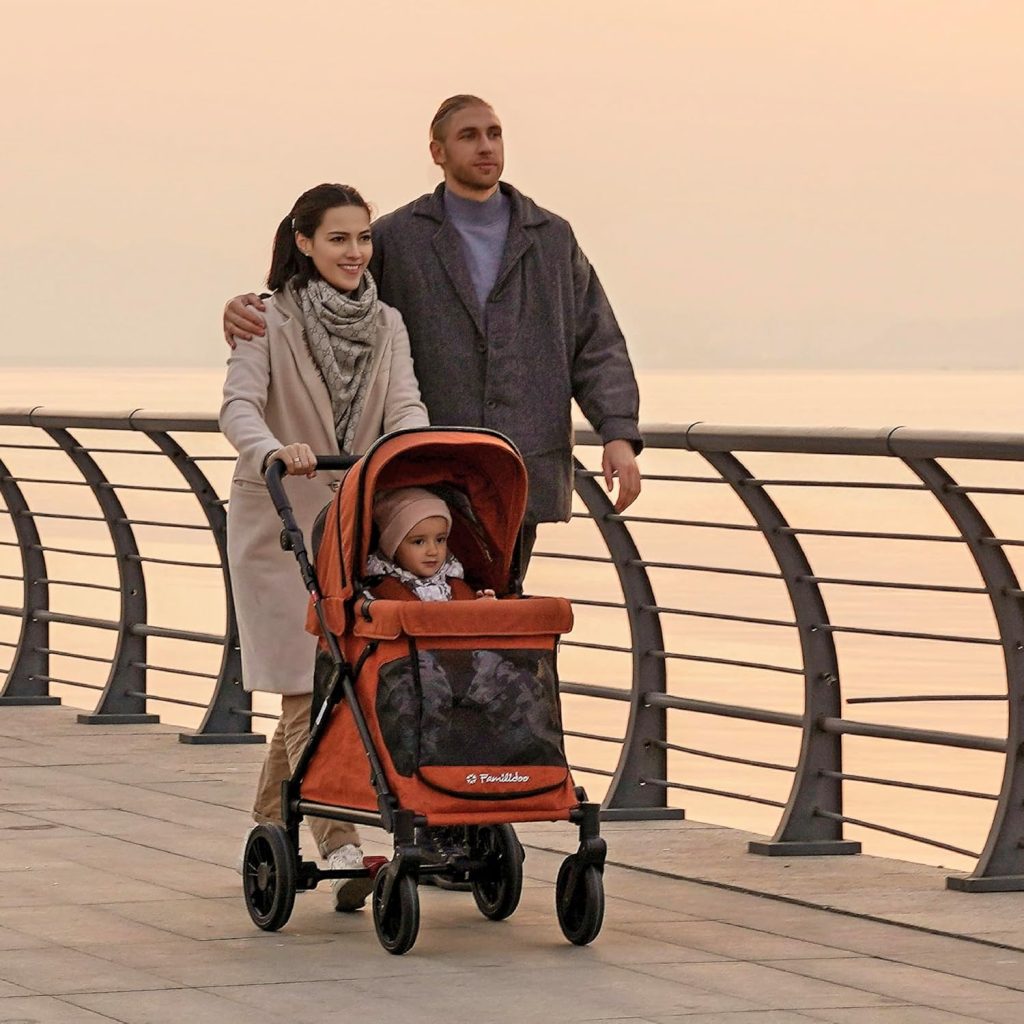
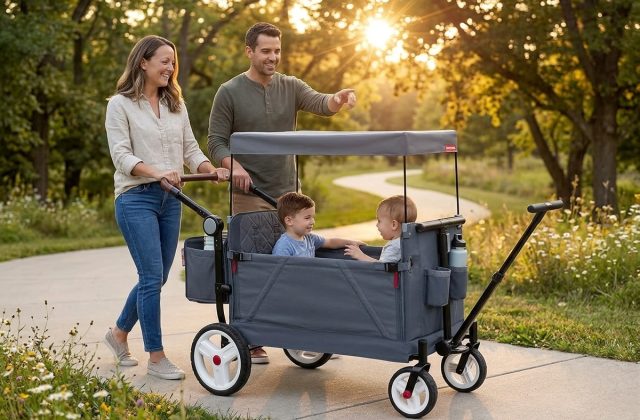
At its core, the Q1 is a single-seat wagon with a removable seat insert. Pull the seat out and you’ve got an open cargo wagon that holds up to 132 lbs total. Leave the seat in and it works more like a stroller, with a 5-point harness (magnetic on the newer 2.0 version) holding a child up to around 33 lbs.
Same wagon, different mode, depending on whether you’re hauling a toddler or hauling groceries.
Frame is aluminum, fabric is polyester, and the whole thing weighs about 25 lbs — light enough to lift with one arm into a trunk. It’s ASTM F963 and EN 1888 certified, so the safety paperwork checks out.
Seat vs. Cargo: The Real Tradeoff
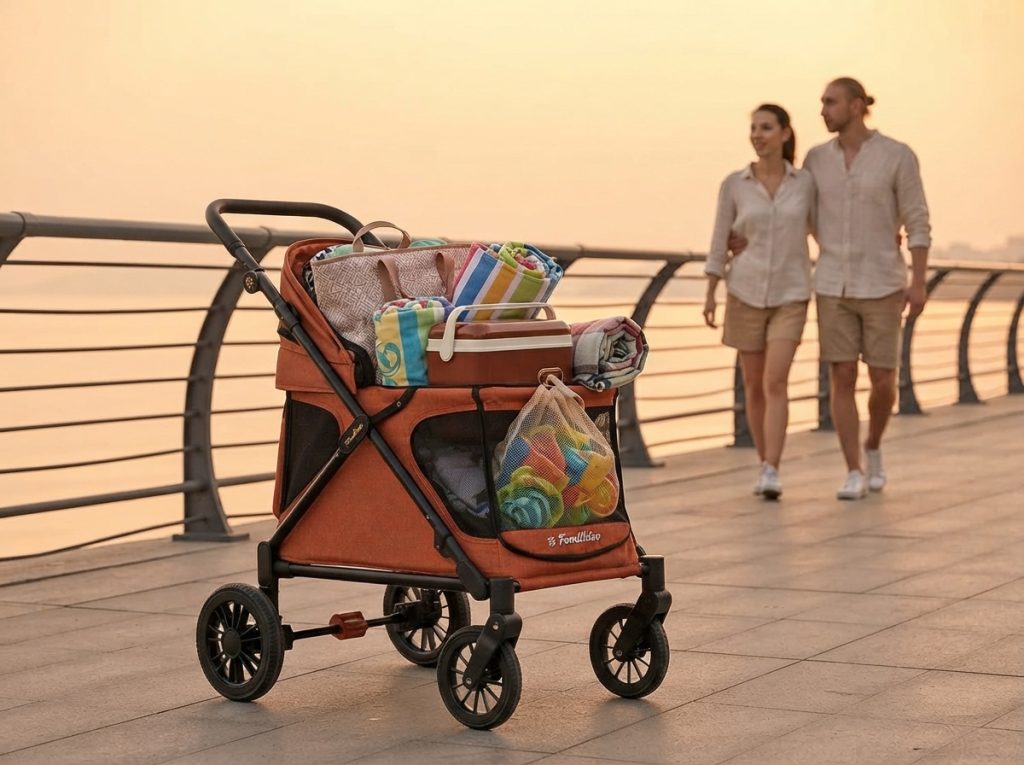
Here’s the thing nobody puts on the product page clearly enough: this is a single-seat wagon. One kid rides, or one kid rides while you also cram gear around them.
If you’re comparing it against something like the Keenz Duo or anything built for two kids side by side, the Q1 loses that comparison right away. It was never meant to compete there. Familidoo’s own answer to that gap is the newer Q2, a two-seater built specifically for growing families.
Where the Q1 has an edge is simplicity. One kid, one wagon, minimal setup. Pop the seat out and now it’s a cart for beach bags, farmers market hauls, or a case of water from Costco. Owners using it as a pet carrier report the same flexibility — dog rides in the seat spot, or the open bed becomes a bigger dog bed for larger breeds.
Fold and Storage
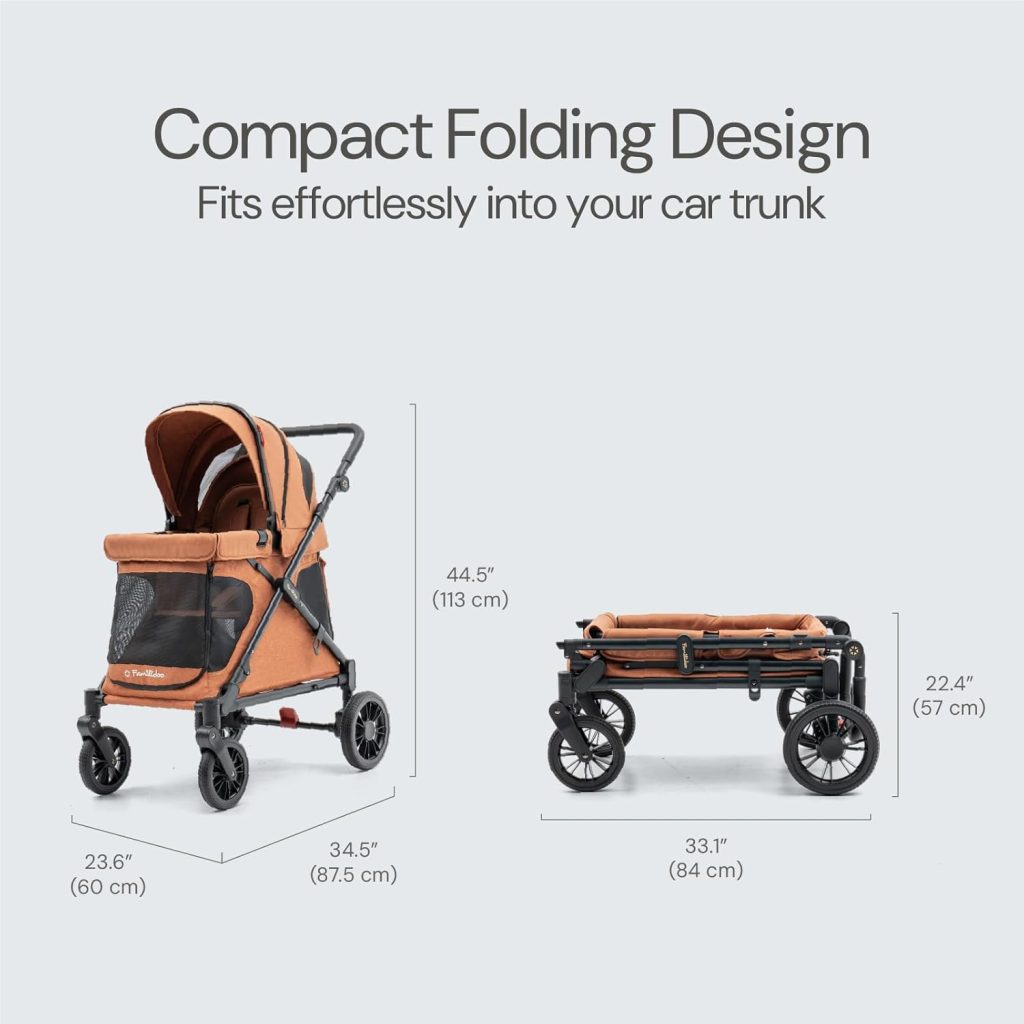
The fold is one of the stronger parts of this wagon. Unlock the side clasp, lift the handle, help the rear axle down with your foot, and it collapses to about 24″ x 33″ x 13″. Small enough for a hatchback trunk with room left over.
Unfolding is just as fast, no wrestling with levers or a two-person job. Matters more than it sounds, because a wagon that’s a pain to fold ends up staying in the garage.
Storage is the part that’s a little overstated on the product page. There’s one Velcro pocket on the back, big enough for a phone, keys, small snacks. That’s it for dedicated storage. Everything else goes in the wagon bed, which means if your kid is in the seat, your storage space just shrank.
How It Handles on Different Ground
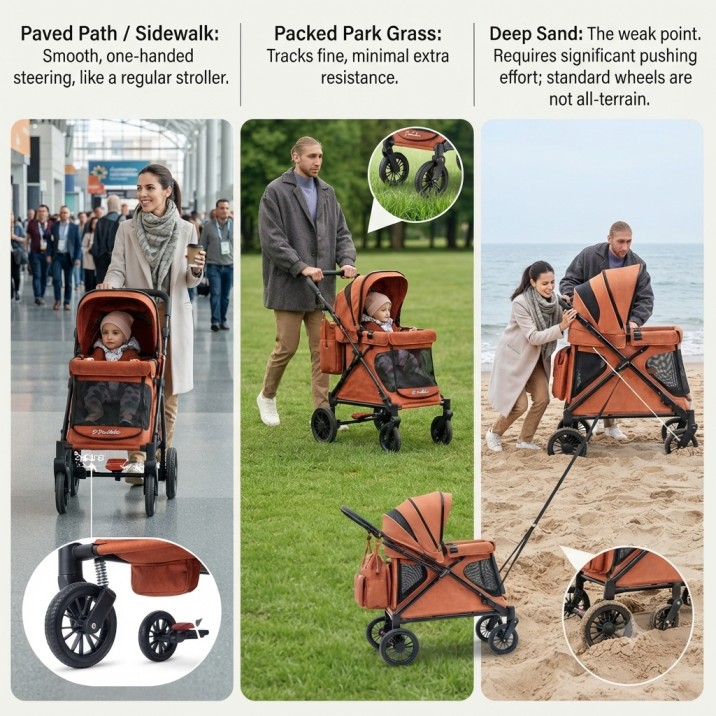
The front wheels rotate 360 degrees and are shock-absorbing, with a rear double-brake setup. On sidewalks and paved paths, it pushes close to a regular stroller — one owner mentioned steering it one-handed through a crowded expo hall with no trouble.
Loaded with a toddler plus a diaper bag on packed park grass, it still tracks fine. Where it starts to work harder is looser grass or a bumpy field — you’ll feel the extra resistance, though it’s not a struggle.
Sand is the honest weak point. These are the standard wheels, not an upgraded all-terrain set. It’ll get through dry, packed sand near a boardwalk okay, but soft or deep sand is a different story — you’re pushing, not rolling. If beach trips are a big part of why you’re buying this, it’s not the wagon I’d pick specifically for that job. Our best beach wagons for kids guide covers wheel setups actually built for sand.
Comfort and the Seat Padding Issue
This is a recurring note in owner feedback, and specific enough to be worth repeating: the seat padding is thin. Several parents describe it as firmer than expected — fine for a park trip, less fine for a two-hour nap.
There’s also a mention worth flagging for anyone with a climbing toddler. A couple of reviewers noted their kid figured out how to stand up in the seat, which matters more here because the seat isn’t built with the kind of fold-down barrier some pricier wagons use. Worth checking in person if your kid is the climbing type.
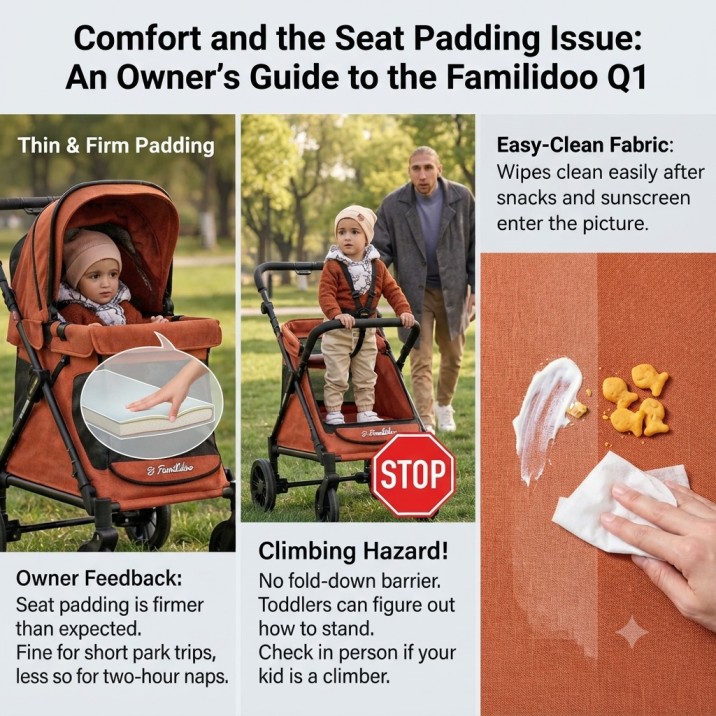
The fabric wipes clean easily, at least, which matters once snacks and sunscreen enter the picture.
Accessories Included (and What Costs Extra)
The base package with the Q1 typically includes:
| Included | Sold Separately |
|---|---|
| Sun canopy with removable visor | Snack and activity tray |
| Bug/mosquito net | Cup holder attachment |
| Rain cover | Travel storage bag |
| Storage pocket | Baby lounger insert |
That’s a decent included bundle compared to wagons that charge extra for a rain cover or canopy. But if you want the snack tray, cup holders, or the padded travel bag for flights, budget more on top of the base price.
Price and Where It Sits in the Market
The original Q1 launched around $239–$349 depending on retailer and promotion. The newer Q1 2.0, which added the magnetic harness, upgraded fabric, and integrated mosquito net, carries an MSRP closer to $419.
Either way, that puts the Q1 well under wagons like the Wonderfold W2 Luxe, which typically runs $500+ and is built for two kids with a heavier-duty frame. The Q1 isn’t trying to be that wagon. It’s aiming at the single-child, budget-conscious buyer who still wants real functionality.

If you’re still torn on whether a wagon makes sense over a traditional side-by-side stroller, our double stroller vs wagon stroller comparison walks through that decision in more detail. And if you’re not sure a stroller wagon solves a real problem for your family at all, is a stroller wagon worth it is worth reading before you commit to any model, not just this one.
Customer Service Is Worth Factoring Into the Decision
This isn’t a side note — it actually affects how much risk you’re taking on at this price. A handful of buyers reported front wheels that stopped rotating properly within the first month, and slow or unresponsive support when they tried to get it fixed. Familidoo’s return window is 7 days, shorter than most baby gear brands.
Put together, that means the smart move is testing the wagon hard in the first week — fold it, load it, take it over your actual terrain — instead of letting it sit in the box while you decide.
So, Is It Worth Buying?
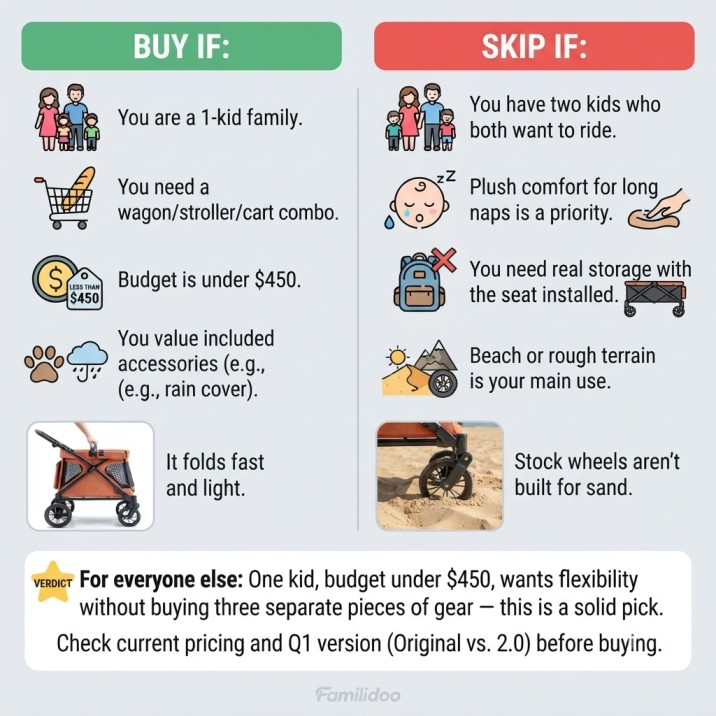
For a one-kid family that wants a wagon doubling as a stroller, a grocery cart, and occasionally a dog carrier, the Q1 is one of the better values in this price range right now. It folds fast, it’s genuinely light, and the included accessories save you money compared to wagons that charge extra for a rain cover.
Skip it if you’ve got two kids who’ll both want to ride — the Q2 or another dual-seat wagon will save you the frustration. Skip it if plush comfort for long naps matters more than price, since the seat padding is on the firmer side. Skip it if you need real storage with the seat installed, since you’re down to one small pocket. And skip it if beach or rough terrain is your main use case — the stock wheels just aren’t built for that.
For everyone else — one kid, budget under $450, wants flexibility without buying three separate pieces of gear — this is a solid pick. Check current pricing directly with Familidoo or your retailer before buying, since it shifts depending on promotions and which version, original Q1 or Q1 2.0, is in stock.