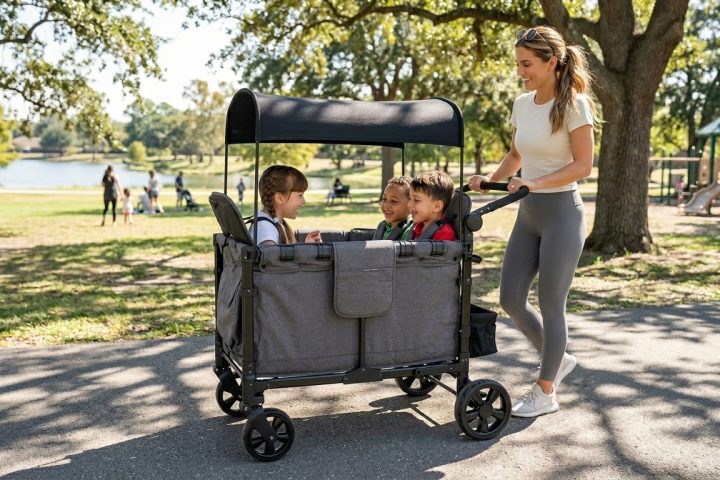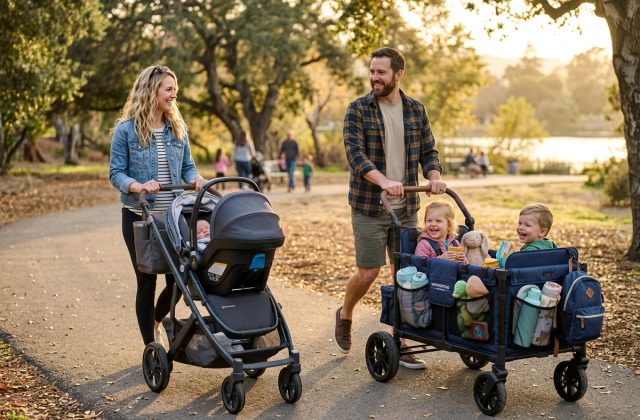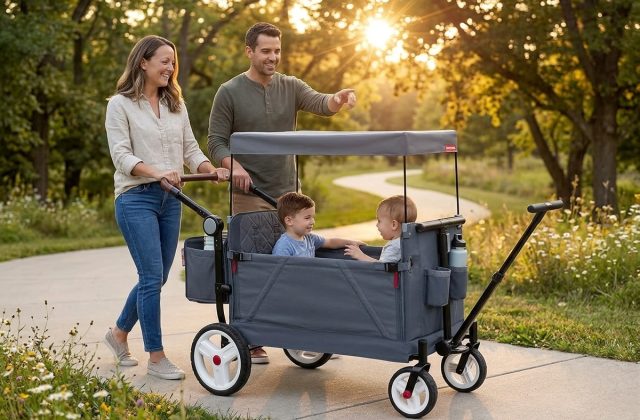
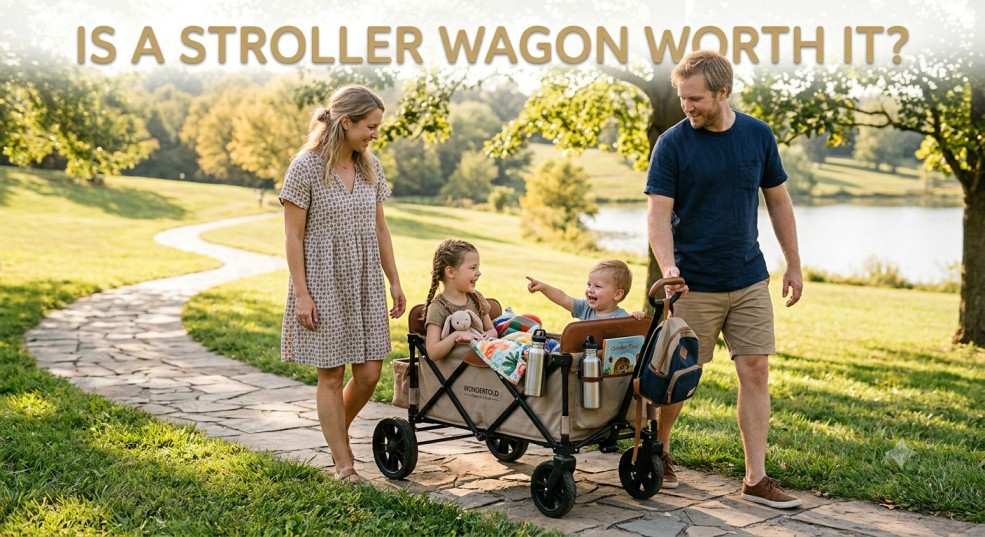
The short answer: it depends on two things — how many kids you have, and what you actually do with them outside the house. If you have two kids between 18 months and 6 years and you do even a handful of long outdoor outings a year, a stroller wagon is probably worth it. If you have one child under 12 months and live in a walkable city, it almost certainly isn’t.

That’s the honest, unsatisfying version. Most articles about this won’t give you that answer because they’re trying to sell you something. I’m going to give you both the cases for and against — including the situations where a stroller wagon is a $400 mistake — so you can make the call that fits your family, not someone else’s.
I’ve used stroller wagons for years across four kids, so I know what they get right and what the marketing glosses over. The TikTok influencer showing her spotless Wonderfold rolling across a pristine park path isn’t wrong that it looks beautiful. She’s just not showing you the 8-minute parking lot loading sequence while a toddler screams.
The Single Best Indicator of Whether a Wagon Is Worth It
Think about the last five times you took your kids somewhere outside the house. Were you mostly running quick errands — grocery store, doctor’s office, 20-minute park visit? Or were you doing longer adventure outings — the zoo, a beach day, a farmers market, a festival, a sports event where you’d be walking and standing for 2+ hours?
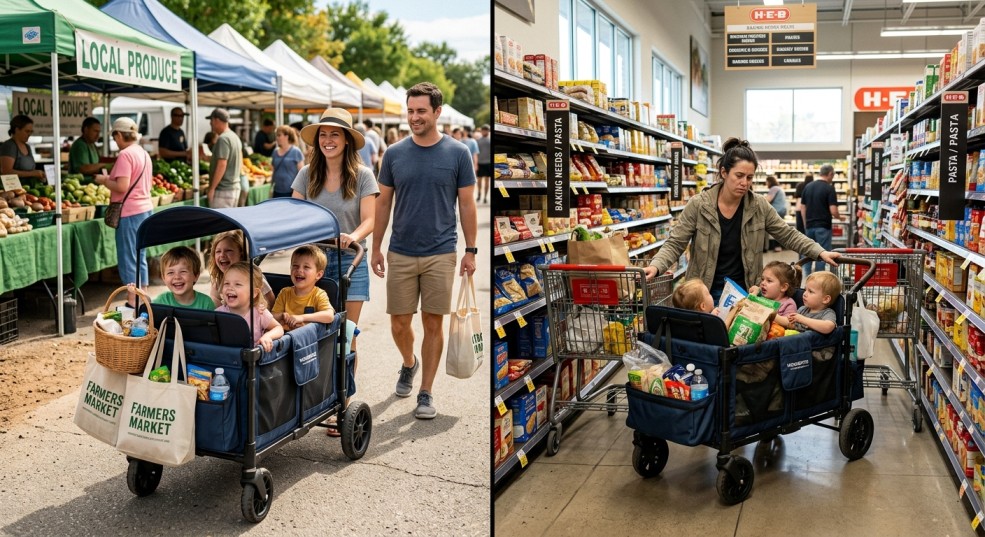
Stroller wagons are optimized for the second category. They’re terrible for the first. That’s not a design flaw — it’s a deliberate tradeoff. The large footprint, the fold that takes a full minute, the length that makes sharp turns in a grocery aisle awkward — these things don’t matter when you’re parked at a festival for four hours and your kids are riding while you haul snacks, sunscreen, and a portable fan. They matter enormously when you’re trying to get in and out of Target in 20 minutes.
One honest parent review I came across described it precisely: ‘The wagon is for the zoo, the neighborhood walks, the pumpkin patch, and the farmers market. It’s an outdoor hauling machine, not an indoor shopping cart.’ If your life has a lot of those outdoor hauling moments, you’ll use it constantly. If your outings are mostly quick and transactional, you’ll leave it in the garage after the second month.
The Honest Comparison: Stroller Wagon vs. Double Stroller
| Factor | Stroller Wagon | Double Stroller |
| Works from birth (newborn) | ✗ Most need adapter; not all support two car seats | ✓ Yes, most from birth with proper adapters |
| Usable age ceiling | ✓ Up to age 7+ (kids willingly ride longer) | ✗ Most kids resist strollers by age 3–4 |
| Carries multiple kids (3–4) | ✓ 4-seat models available | ✗ Max 2 kids for double strollers |
| Storage / cargo capacity | ✓ Dramatically more — beach gear, coolers, bags | ✗ Underseat basket fills quickly |
| Face-to-face seating (kid engagement) | ✓ Yes — kids interact, less resistance to riding | ✗ Tandem: one kid faces backward; side-by-side: forward only |
| All-terrain performance | ✓ Larger wheels handle grass, gravel, sand | ✗ Most doubles struggle off paved surfaces |
| Fold speed / compact fold | ✗ Most take 45–90 seconds; large folded footprint | ✓ Most strollers fold in 10–20 seconds; fits small trunks |
| Maneuverability in tight spaces | ✗ Longer footprint; challenging in narrow aisles | ✓ Side-by-side is wide but shorter; tandem fits tight paths |
| Disney World / major theme parks | ✗ Banned as of May 2019 | ✓ Allowed (within size limits) |
| Works on public transit / airplanes | ✗ Bulky; harder gate-check; airline varies | ✓ Lighter, compact, gate-checks easily |
| Newborn support / recline | ✗ Most seats upright or semi-recline only | ✓ Full recline from birth; proper head support |
| Price range | ✗ $220–$750+ (most good ones $380–$600) | ✓ $100–$800 (solid options from $200) |
| Resale value (mid-premium tier) | ✓ Holds value well; active FB Marketplace demand | ~ Varies; mainstream brands retain moderate value |
| Post-kid utility (camping, beach, sports) | ✓ Transitions to general hauling after kid years | ✗ Single-use product; little value after kids outgrow it |
| One thing this table can’t capture: kids sit in wagons willingly for much longer than strollers. The face-to-face seating keeps them engaged with each other. Multiple parents across Reddit and Twiniversity describe a specific shift — around age 2 or 3 — where the stroller starts getting refused but the wagon still gets used happily. That behavioral difference is worth more in real life than most spec comparisons suggest. |
The Five Situations Where a Stroller Wagon Is Genuinely Worth Every Dollar
You Have Two Kids Between 18 Months and 6 Years
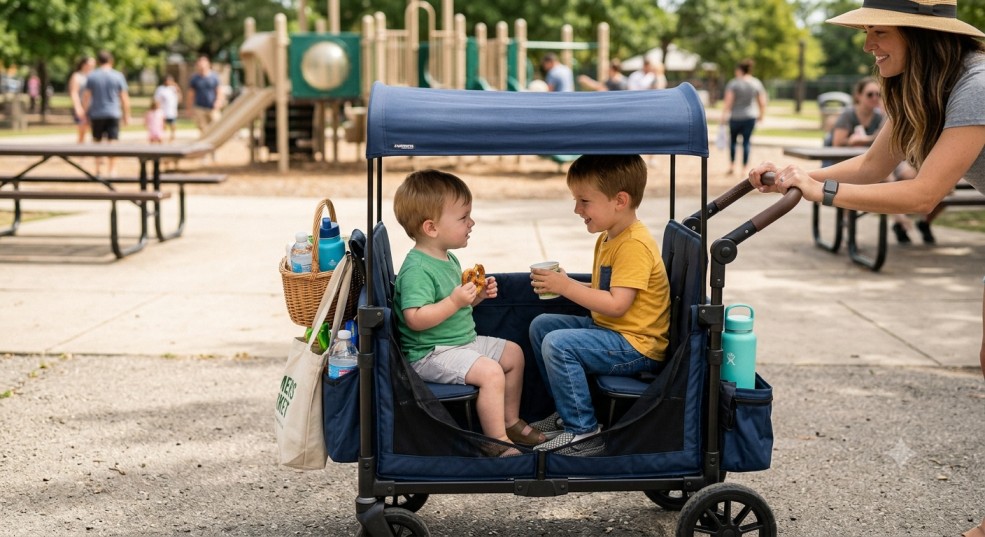
This is the sweet spot. Kids in this range are old enough to sit upright and actually enjoy the ride, but young enough that they’ll still get in voluntarily without a negotiation. Two kids in this window means you need a double solution, and the wagon covers them both while accommodating the size difference between an 18-month-old and a 5-year-old that a double stroller — with its fixed, equal seats — often doesn’t.
The face-to-face seating matters here more than people realize before they have it. Kids who sit across from each other talk, share snacks, point at things, and entertain each other. That reduces the parental intervention load significantly on a long day out. A tandem stroller puts one kid staring at the back of the other’s head. It’s not a trivial difference after hour two.
You Do Outdoor Outings Regularly — Especially Events and Nature
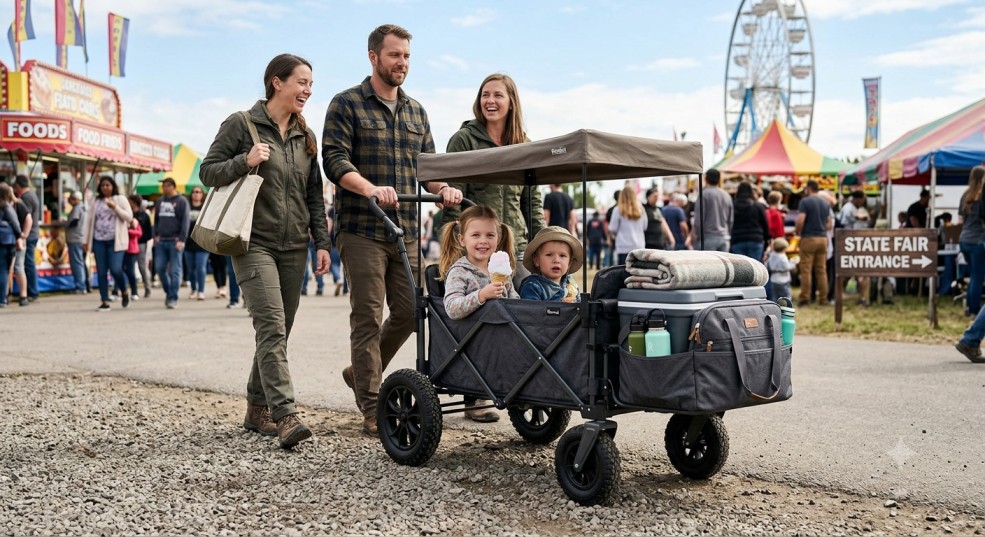
Zoos. State fairs. Music festivals. Botanical gardens. Farmer’s markets. Beach days. Any context where you’re outdoors, on your feet for hours, covering varied terrain, and hauling stuff — the stroller wagon is genuinely the right tool. The larger wheels handle grass, gravel, and light sand better than standard stroller wheels. The open cargo area means you’re not doing three trips from the car and back. The push-pull capability means your arms aren’t screaming by the time you reach the entrance.
For beach outings specifically, the calculus shifts a little depending on the wagon — see our beach wagons guide for which models actually handle deep sand versus which ones just claim to.
Your Older Kid Is Starting to Refuse the Stroller
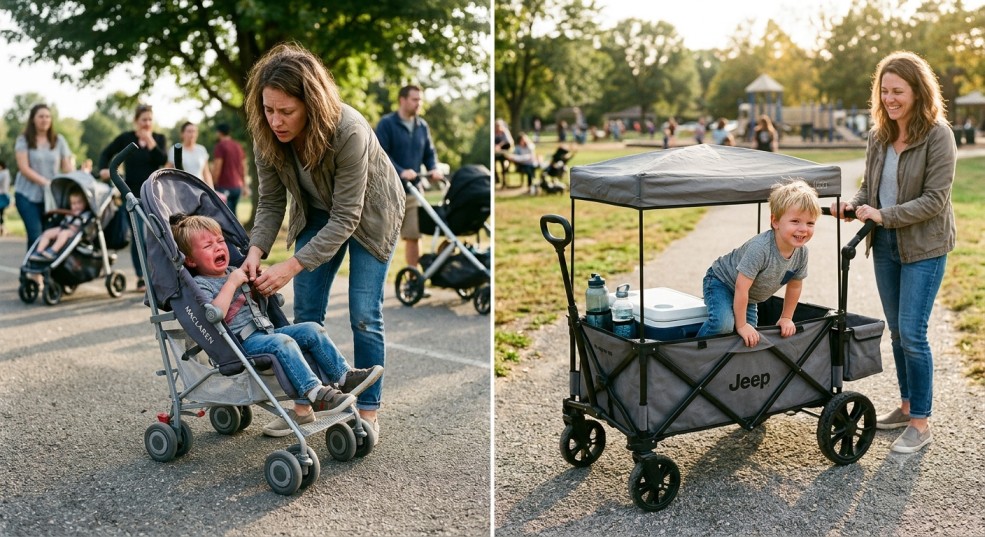
This one is underrated as a trigger. A 3.5-year-old who has decided strollers are for babies will fight you every time you try to strap them in. That same kid, presented with a wagon, often climbs in voluntarily — because it doesn’t feel like a baby device. Multiple parents describe this exact transition. The wagon is different enough in form and feel that the ‘too old for this’ resistance doesn’t apply in the same way.
If you have a toddler who’s started refusing the stroller and a younger sibling who still needs containment, a stroller wagon solves both problems simultaneously.
You’re Planning More Kids (or Already Have Three or More)
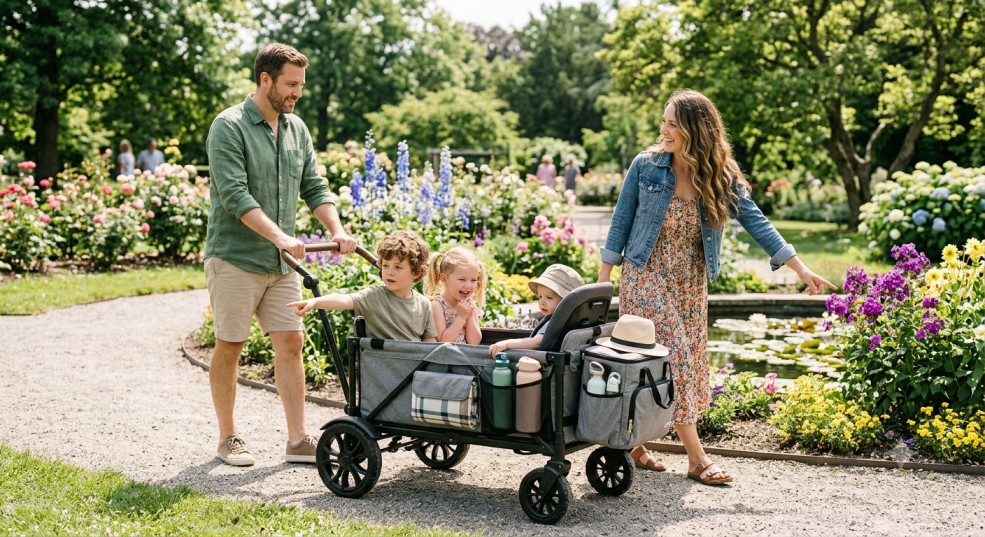
The value equation shifts dramatically when you factor in future use. A $500 wagon split across three children and five years of use is roughly $100 a year — less than a decent mid-range single stroller. The wagon that hauls your two-year-old and your newborn today is the same wagon that hauls a six-year-old and a four-year-old in three years, and it can double as general cargo hauling after that.
Families with three or more kids sometimes look at 4-seat stroller wagons — though our honest take is that unless you genuinely have three or four kids who’ll all need to ride simultaneously, the extra size and weight of a 4-seat model is usually more hassle than it’s worth for most families.
Your Current Stroller Setup Is Genuinely Not Working
This is the most practical trigger of all. If you’re currently managing two kids with a double stroller and a separate utility wagon — one for kids, one for stuff — and you’re moving both simultaneously while a third adult doesn’t exist, the stroller wagon solves that. One vehicle, one hand on the handle. The consolidated load is a real quality-of-life improvement, even if the individual vehicle is bulkier.
The Five Situations Where a Stroller Wagon Is Probably Not Worth It
You Have One Child and Light Gear Needs

Single kid, mostly paved surfaces, light cargo? A stroller wagon is solving a problem you don’t have. The added size, weight, and fold complexity bring no benefit when a single-seat stroller does the job in half the footprint. The premium you’d pay for a wagon over a quality single stroller is real money with no meaningful return in your situation.
The exception: if you’re planning a second child soon and want gear that will work for both — buying a stroller wagon ahead of the second arrival makes sense as a forward-looking purchase.
You Live in a Dense City and Use Transit Regularly
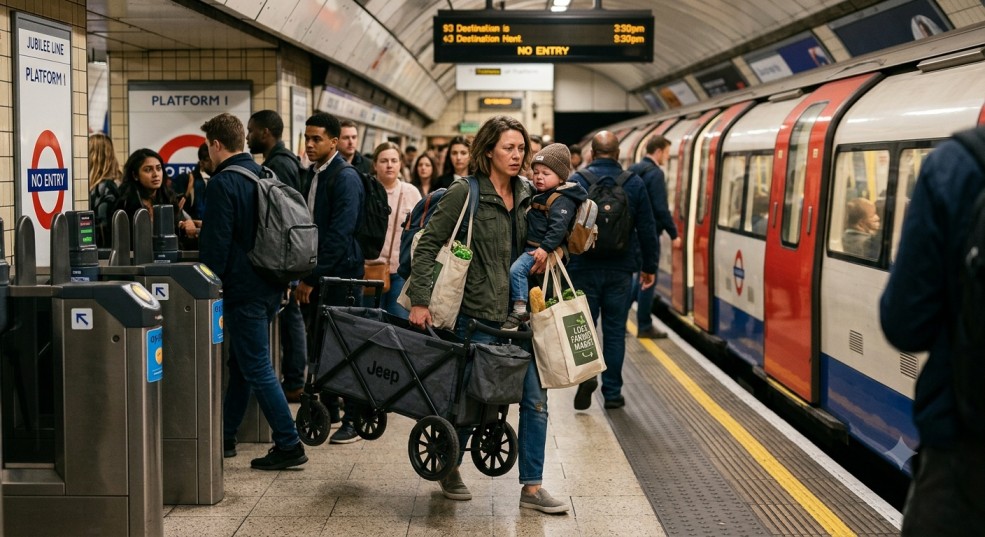
Stroller wagons are bad at city life. Not terrible, but meaningfully worse than a compact stroller. The length makes narrow sidewalks and turns awkward. The fold doesn’t fit in most elevator-free subway cars or on crowded buses without occupying space other passengers need. The weight makes stairs a serious physical challenge. Urban environments favor narrow, fast-folding, lightweight strollers — and no wagon in this category competes with an umbrella stroller for that use case.
Plenty of city families own stroller wagons for weekend park and beach outings and keep a lightweight stroller for daily transit use. That two-vehicle approach makes sense. But if you’re only buying one thing and you’re transit-dependent, the wagon isn’t it.
Your Kids Are Under 12 Months
The newborn phase is the stroller wagon’s worst window. Most wagons require kids to sit upright, which means 6 months minimum for safe use without adapters. The ones with infant car seat adapters (Veer Cruiser, some Wonderfold models) help, but those adapters cost extra, add bulk, and address only one baby at a time on most models.
A newborn needs head support, recline, and ideally a bassinet or infant car seat attachment — things traditional strollers and travel systems handle better. If your child is currently a newborn, the stroller wagon is a purchase for six months from now, not today. Our guide to stroller wagons for toddlers covers the right entry window in more detail.
Disney World Is Your Primary Big Outing
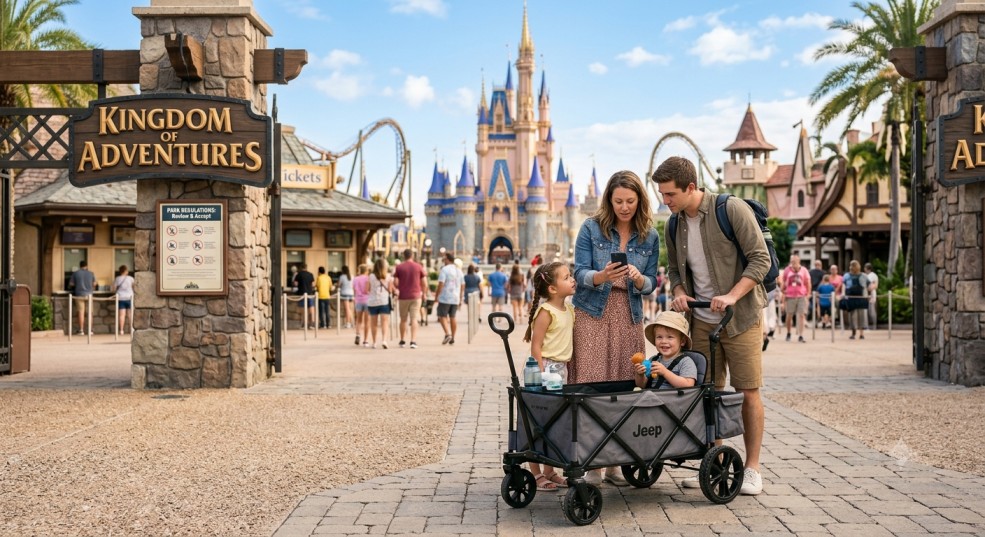
Wagons have been banned at Disney World, Disneyland, and many major theme parks since May 2019. There are no size exceptions — the ban is categorical. If the family’s annual Big Trip is Disney, and that’s the main context where you imagined using the wagon, this is a critical detail to know before spending $400+.
| Disney Springs (the outdoor shopping and dining area) does allow wagons. Some families bring them for resort use and Disney Springs visits. But the four main parks — Magic Kingdom, EPCOT, Hollywood Studios, Animal Kingdom — all prohibit them regardless of size. |
You’re Hoping the Wagon Will Replace All Your Stroller Needs
It won’t. Most families who own a stroller wagon keep a lighter stroller for quick errands, doctor’s visits, and situations where the wagon’s bulk creates more friction than it solves. The wagon is a supplement to your stroller toolkit for most families, not a replacement. Buying it with full-replacement expectations almost always leads to disappointment — not because the wagon is bad, but because different outings genuinely need different gear.
The Real Cost Over Time — Is It a Good Investment?
| Option | Price | Useful Life | Cost/Year | Notes |
| Budget stroller wagon (e.g. Baby Trend Expedition) | $220–$280 | 1–2 yrs heavy use, 3–4 yrs total | $55–$140/yr | Entry point; narrow wheels, basic fold |
| Mid-range wagon (e.g. Radio Flyer Voya XT, Keenz 7S) | $380–$500 | 3–5 yrs of use | $80–$130/yr | Where most families land; solid build, good resale |
| Premium wagon (e.g. Wonderfold W2, Gladly Anthem2) | $449–$599 | 4–6 yrs of use | $75–$125/yr | Best longevity; aluminum frame holds resale value well |
| Ultra-premium (e.g. Veer Cruiser) | $599–$749 | 5–7 yrs of use | $85–$150/yr | Niche: best terrain performance, highest resale retention |
| Side-by-side double stroller (mid-range) | $300–$500 | 2–3 yrs of heavy use | $100–$250/yr | Comparison baseline; faster fold, less longevity for older kids |
The resale market tells you something important here: good stroller wagons hold value. Veer Cruisers, Wonderfold W2 and W4 models, and Gladly Anthem wagons consistently appear on Facebook Marketplace and OfferUp with asking prices at 50–70% of retail. That matters if you buy with care, use it for a few years, and sell rather than donate. The effective cost of ownership drops meaningfully when you factor resale into the math.
Premium double strollers (UPPAbaby, Bugaboo) also hold value well. Mid-range doubles lose value faster. Budget options on both sides depreciate to near-zero. If cost-per-year is how you’re thinking about it, a quality wagon bought secondhand and sold again when you’re done is often cheaper than a brand-new budget double stroller that can’t be resold.
The Verdict Depends on Your Family — Use This to Decide
| Your Situation | If YES | If NO |
| Do you have more than one child (or a second on the way)? | Strong case for a wagon | A single stroller probably serves you better |
| Are your kids between 18 months and 7 years old? | Wagon shines in this window | Under 18 months: start with a stroller; over 7: they’ll mostly walk |
| Do you do long outings — zoos, parks, festivals, beach days? | Wagon will transform those trips | Shorter daily errands favor a stroller’s compactness |
| Do you drive an SUV, minivan, or have a large trunk? | Wagon storage works fine | Compact cars struggle to fit most wagons folded |
| Do your kids resist the stroller but might ride in a wagon? | Wagons get older kids to actually sit down | If they’re fine in a stroller, no urgency to switch |
| Are you planning more kids and want gear longevity? | Wagon earns its cost over multiple children | No future kids planned: harder to justify premium price |
| Do you live in a dense city and use public transit daily? | Stroller is genuinely more practical for urban transit/tight spaces | |
| Are Disney World or similar theme parks your main outing? | Wagons are banned at Disney — stroller is your only option there |
| The pattern across that table: if you answered YES to the first three questions, a stroller wagon is almost certainly worth it for your family. If you answered NO to most of the top half and YES to the bottom two rows, stick with a double stroller and save the money. |
What Most Articles Get Wrong About This Question
Almost every ‘is a stroller wagon worth it’ piece on the internet is written by someone who already owns one and loved it — or by a brand. That creates a selection bias problem. The people who didn’t find it worth it quietly returned it or listed it on Marketplace; they’re not writing reviews.
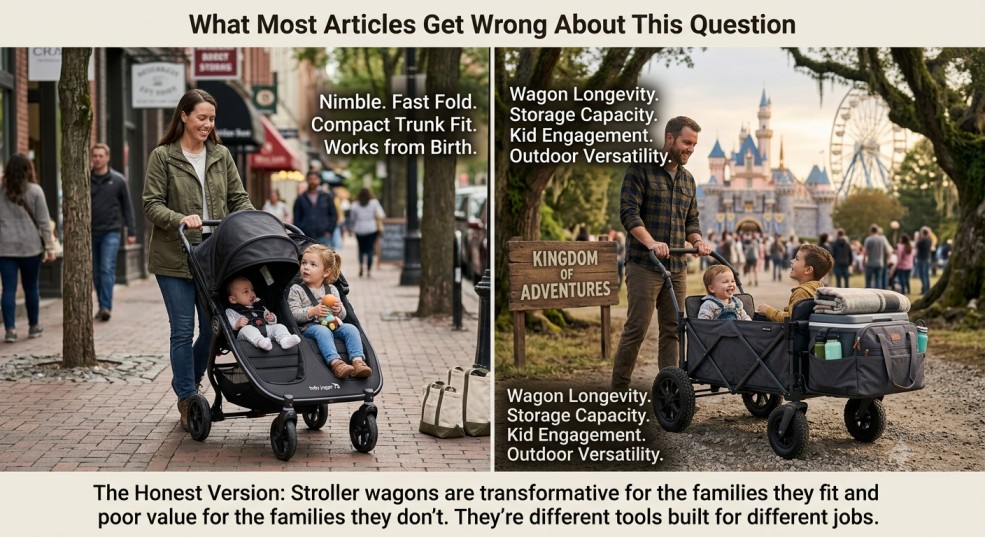
The honest version: stroller wagons are transformative for the families they fit and poor value for the families they don’t. The fit comes down to kid age, how you spend your outdoor time, what kind of car you drive, and whether you’re going to places that allow them. None of those are about the wagon itself — they’re about your life.
One specific misconception worth correcting: the idea that a stroller wagon is ‘better’ than a double stroller in any absolute sense. It isn’t. A Baby Jogger City Mini GT2 Double handles tighter urban spaces, folds faster, fits in smaller trunks, and works from birth with a car seat adapter. The wagon wins on longevity, storage capacity, kid engagement, and outdoor versatility. They’re different tools built for different jobs. Pretending one is categorically superior is how families buy the wrong thing.
If you’ve decided a stroller wagon makes sense and you’re ready to pick one, our best stroller wagon guide covers the top picks across budget tiers with honest assessments of each — and our double stroller vs. wagon stroller comparison goes deeper on the head-to-head if you’re still weighing both options.
A Few Things Worth Knowing Before You Buy
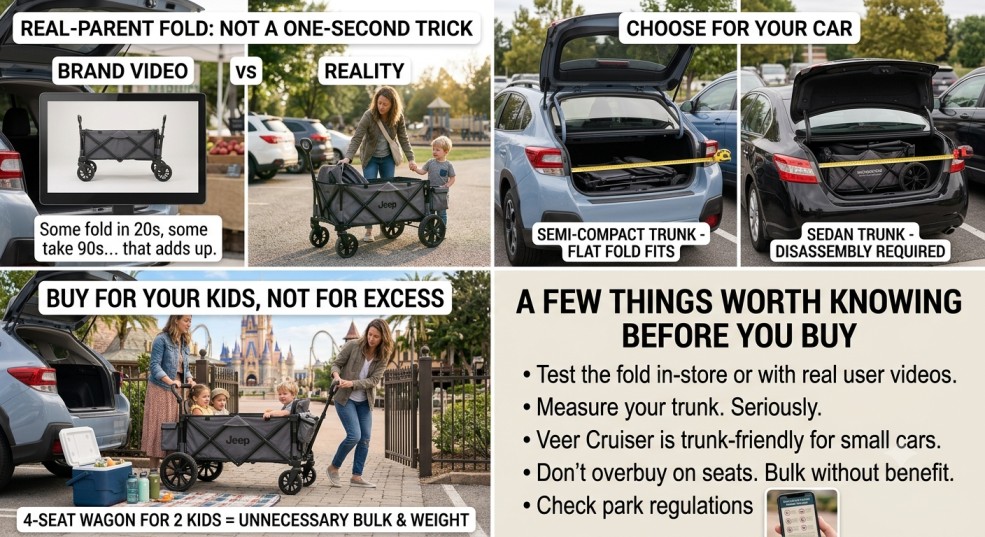
Test the fold before committing. In-store if possible, or watch real user videos rather than brand videos. The brand videos always make the fold look like a one-second magic trick. Real-parent videos show what it actually looks like while managing children, a parking lot, and a bag on your shoulder. Some wagons fold in 20 seconds and some take 90, and that difference adds up across a summer of weekend outings.
And if you’re comparing specific models before deciding — whether that’s the Keenz 7S, Veer Cruiser, or Radio Flyer Voya — we’ve reviewed each one with real specs and community feedback, not just what the brand says about itself.