
Ever Advanced Side-Unzip Wagon Review (2026): Is It Worth Buying?
As an Amazon Associate we earn from qualifying purchases. Prices and availability are accurate as of the date/time indicated and are subject to change.
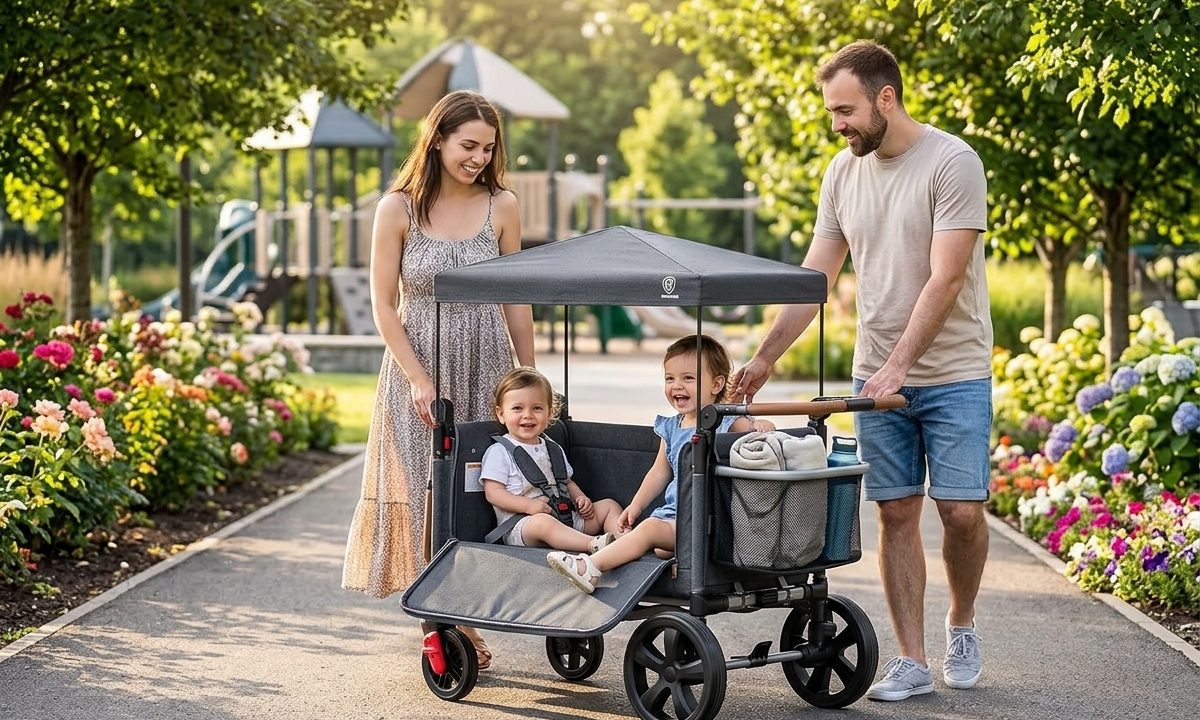
The Side-Unzip runs $259.99 on sale, $339.99 at full price, and its whole reason for existing is right in the name: unzip one wall of the wagon and it drops down into a bench, so kids climb in and out on their own instead of being lifted over the side. At the time it was tested against 11 other wagons, only Radio Flyer offered anything similar. It folds down to the smallest size of every wagon in that comparison. It also has one of the most consistently annoying canopy setups in the category, no cup holders, and a brake that skidded a few feet before actually stopping a loaded wagon rolling downhill.
This is the kind of wagon that’s genuinely good at the things it’s good at, and genuinely irritating at the things it’s not. Worth knowing which is which before you buy.
| Spec | Ever Advanced Side-Unzip |
| Price | $259.99 sale / $339.99 regular |
| Age range | 2 years and up |
| Weight capacity | 110 lbs combined (55 lbs per seat) |
| Wagon weight | 35.9 lbs |
| Frame | Steel |
| Seats | Flat (floor-level), 5-point harness, side-unzip bench entry |
| Handle | Push and pull, adjustable 20″-45.5″ |
| Front / rear wheels | 8″ / 12″, polyurethane, shock-absorbing |
| Inner wagon size | 30″L x 17″W x 14″H |
| Assembly time | About 13 minutes out of the box |
| Fold time | ~7 sec without canopy, ~48 sec with |
| Folded size | 6.3 cubic feet (30.5″L x 27.5″W x 13″H) |
| Car seat adapter | Not available |
The side-unzip feature actually works
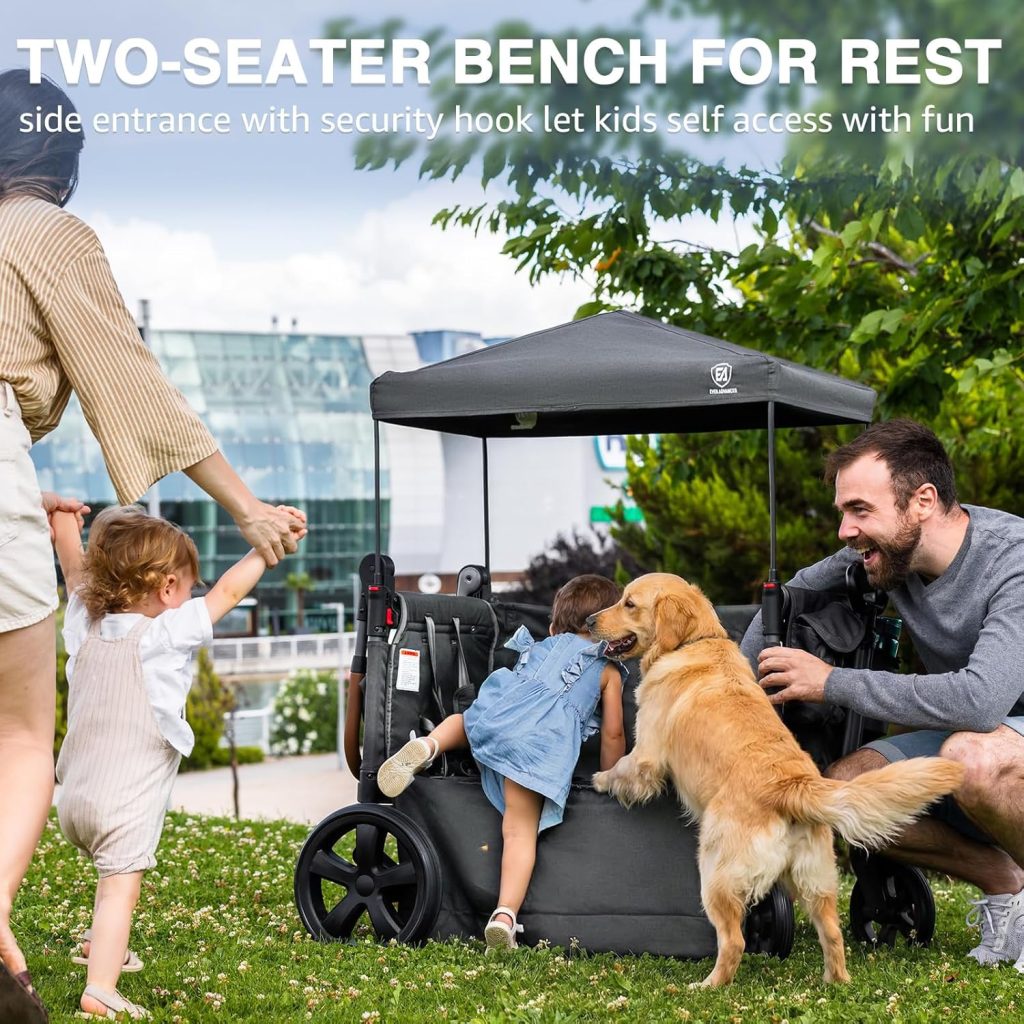
Release the metal tabs at the corners and unzip the side, and that wall folds down into a bench. Bigger kids climb over on their own even without unzipping anything, just by stepping over the wall. Smaller kids need the side down, or need to be lifted, same as any other box-style wagon. It’s a real, functional upgrade over lifting a squirming toddler over a tall wall every single time, and testing found it held up fine with repeated use rather than being a gimmick that breaks down after a few weeks.
Made by Ever Advanced, a company founded in Germany in 2017, this Side-Unzip model followed the brand’s original wagon by a few years and kept the same general shape while adding the bench feature and a bigger rear basket. Newer listings for this wagon note JPMA certification, though it’s worth confirming on the specific listing you’re buying from, since Ever Advanced sells several wagon variants and certification details can vary between them.
The fold is genuinely the best part
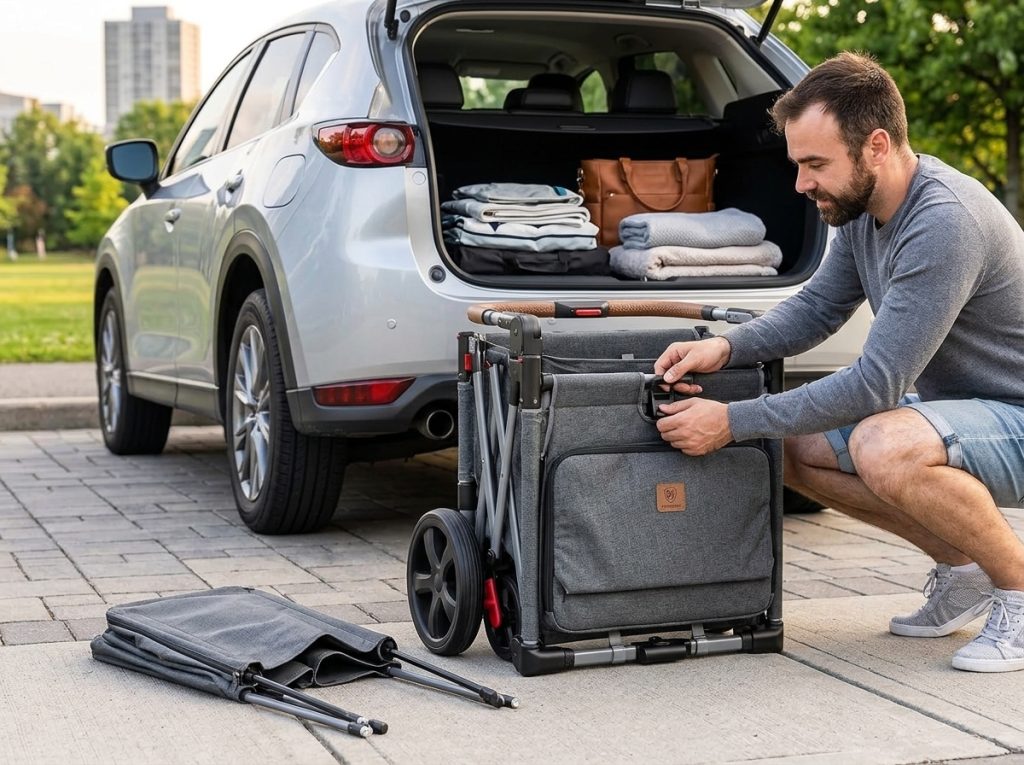
Without the canopy, this wagon folds in about 7 seconds — squeeze the handle release button, pull the center up, and the frame collapses on itself. That’s the fastest bare-frame fold of any wagon in its test group. A locking mechanism catches automatically and holds through being loaded in and out of a car.
The canopy is where that speed disappears. Taking it off, collapsing the pole hinges, and stowing it adds about 41 more seconds, bringing the full fold to roughly 48 seconds. Unfolding follows the same pattern: under 10 seconds without the canopy, about 45 seconds with it.
| Wagon | Folded size |
| Ever Advanced Side-Unzip | 6.3 cu ft |
| Graco Modes Adventure | 7.0 cu ft |
| Veer Cruiser | 7.9 cu ft |
| Ever Advanced (original) | 8.1 cu ft |
| Keenz 7S | 8.9 cu ft |
| Evenflo Pivot Xplore | 9.0 cu ft |
| WonderFold W1 Original | 9.5 cu ft |
| Jeep Wrangler | 10.2 cu ft |
| Baby Trend Expedition | 13.1 cu ft |
At 6.3 cubic feet folded, this is the smallest folded footprint of any wagon in its comparison group — smaller than the WonderFold W1, smaller than a Keenz 7S, smaller than its own predecessor. It fit easily into both a Honda Civic trunk and a minivan in testing. If trunk space is the main thing driving your decision, this is one of the strongest options in the category on that measure alone.
The canopy is the actual weak point
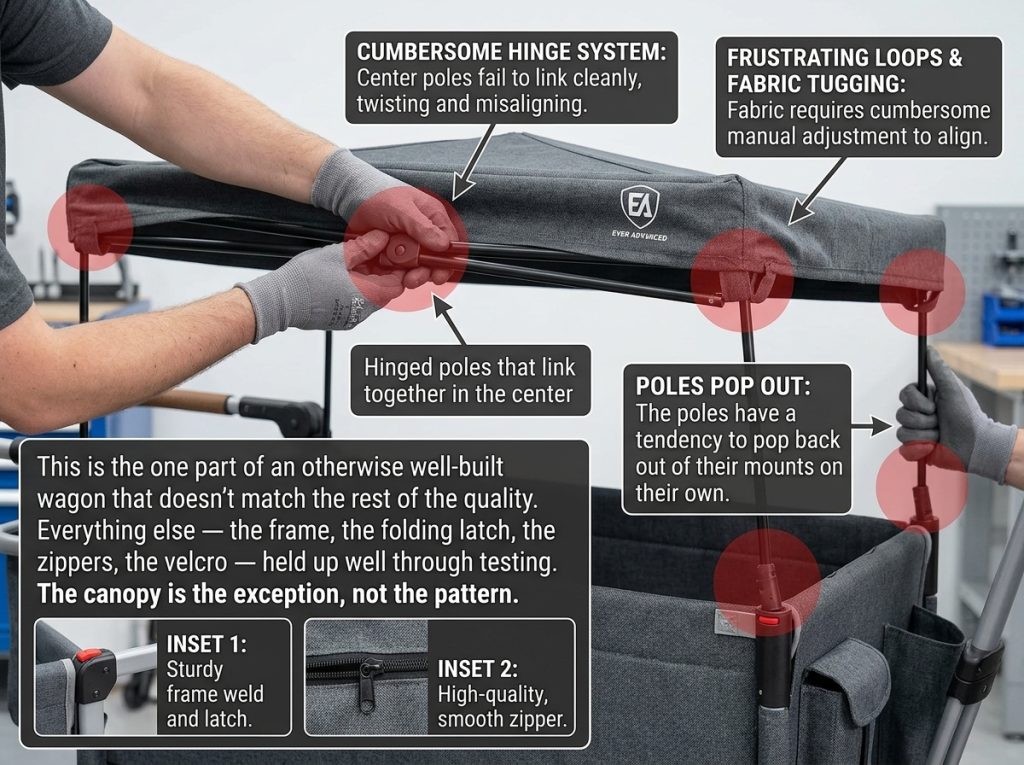
The canopy uses a system of hinged poles that link together in the center. Setting it up means sliding fabric loops into position and pushing the poles firmly into their mounting holes — a process testers described as cumbersome even after repeated practice, and one that usually needs the fabric corners tugged into place afterward. The poles also have a tendency to pop back out of their mounts on their own.
This is the one part of an otherwise well-built wagon that doesn’t match the rest of the quality. Everything else — the frame, the folding latch, the zippers, the velcro — held up well through testing. The canopy is the exception, not the pattern.
Ride and terrain: better off-road than the wheel size suggests
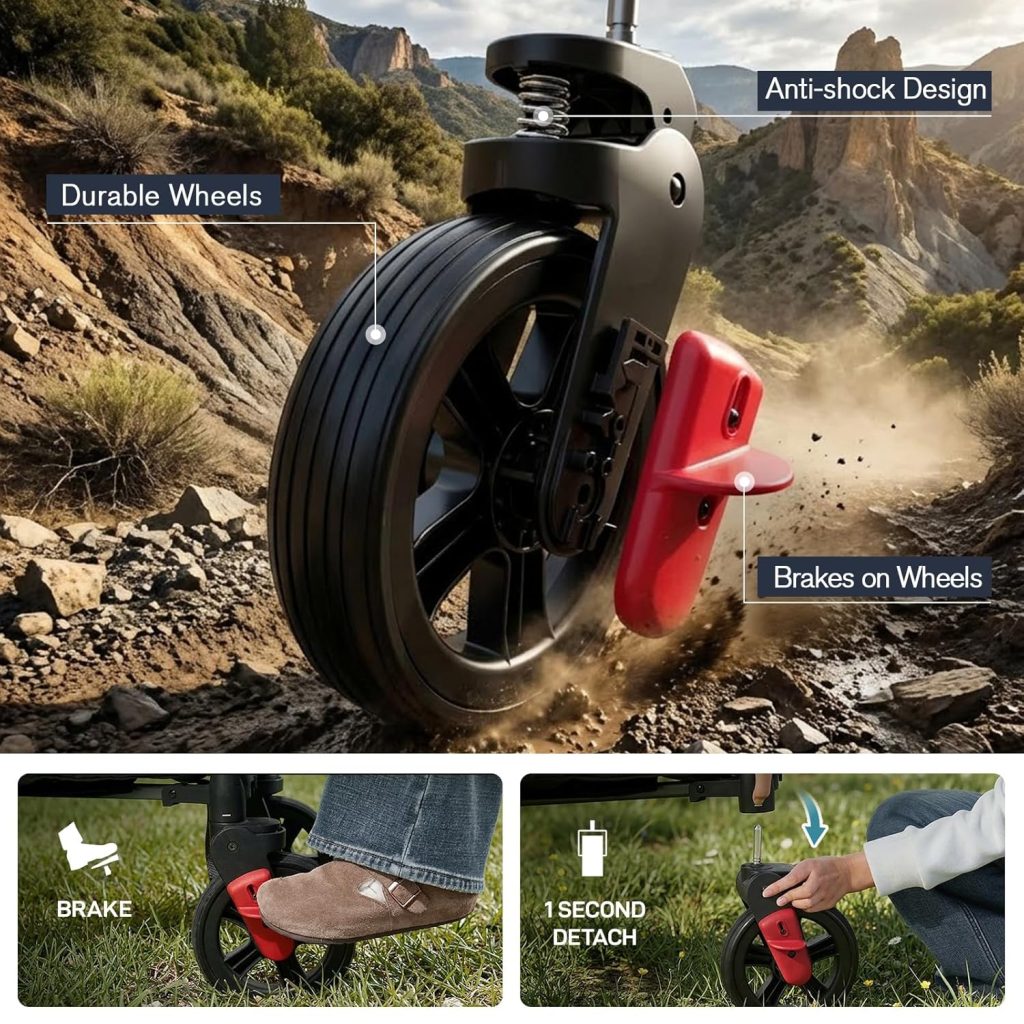
Front wheels are 8 inches, rear wheels 12 inches — on the larger end for this category — made from polyurethane rather than rubber or EVA foam. PU wheels are lighter than rubber and hold up well, though testing found they grip slightly less confidently than rubber, which showed up specifically in braking tests. All four wheels have shock absorption built in.
On rough terrain — bumps, cracks, small branches, loose rocks — this wagon outperformed most of the field, which surprised testers given the wheels are a fairly typical size for the category. The suspension tuning seems to be the reason: enough give to absorb bumps without the wheels twisting or hanging loose. Grass and hill performance were both about average, and like every wagon tested, pushing it sideways across a slope was a fight, since it kept trying to turn downhill.
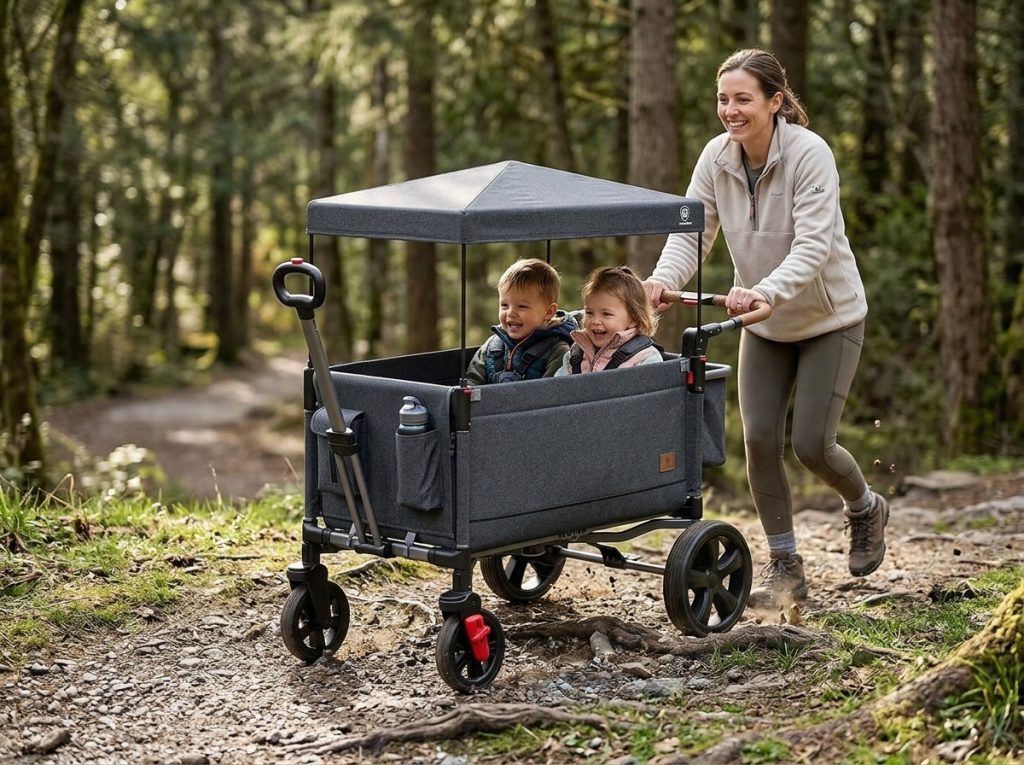
How it compares on push, roll, and turn effort
| Measure | Ever Advanced Side-Unzip | Best in group | Worst in group |
| Force to start rolling | 11.4 lbs (2nd best) | Veer Cruiser, 11.0 lbs | Original Ever Advanced, 16.5 lbs |
| Force to keep rolling | 7.2 lbs (2nd best) | Evenflo Pivot Xplore, 7.1 lbs | Jeep Wrangler, 9.9 lbs |
| Force to turn from a stop | 44.0 lbs (worst) | Veer Cruiser, 15.4 lbs | Ever Advanced Side-Unzip, 44.0 lbs |
Getting it rolling and keeping it moving both took comparatively little effort — near the front of the pack on both measures. Turning a fully loaded wagon from a dead stop was the opposite story: at 44 pounds of force, this was the hardest wagon in the entire comparison group to turn from a standstill, notably worse than everything else tested including the notoriously stiff Jeep Wrangler. Once moving, though, it tracked straighter than any other wagon tested, which matters more on long walks than the occasional tight turn.
Weight: middle of the pack
At 35.9 pounds, this wagon is about 2 pounds heavier than the original Ever Advanced it replaced — the tradeoff for the added bench mechanism and bigger basket. It’s still lighter than a Baby Trend Expedition or Jeep Wrangler, both of which run well over 40 pounds, but it’s not competing for lightest-in-class the way it competes for smallest-folded.
Assembly and cleaning
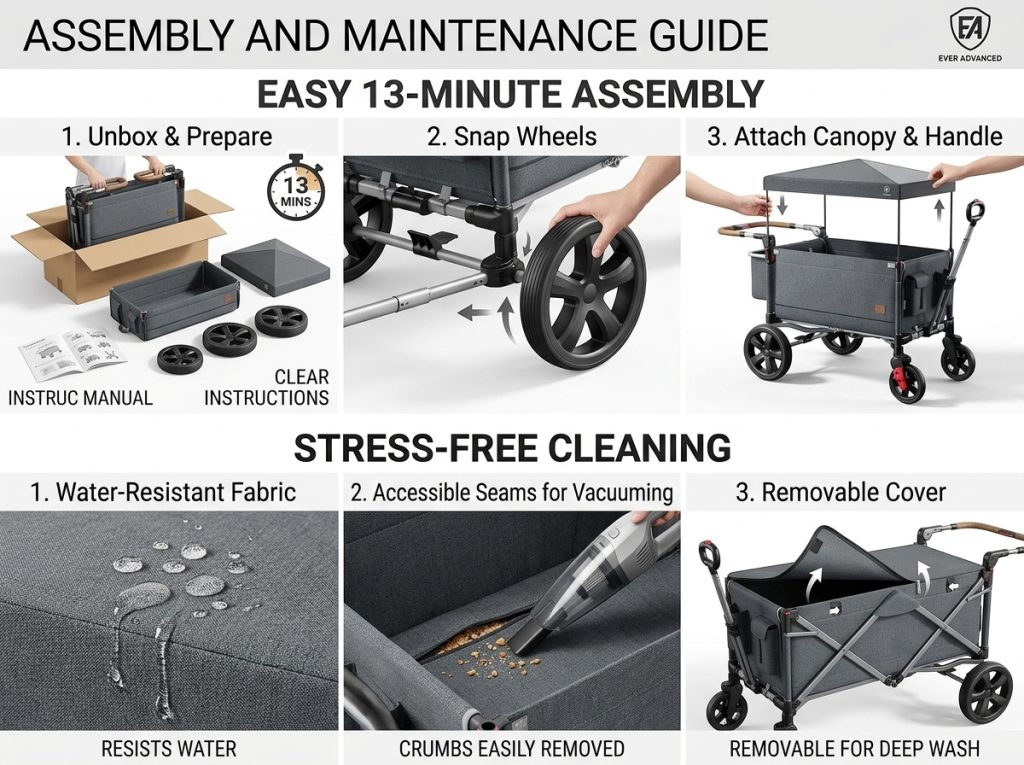
Out of the box, this wagon took about 13 minutes to unbox and assemble in testing, most of it spent removing packaging rather than actually building anything. The included manual was rated clear and easy to follow. The fabric is thick and canvas-like, resists water, and cleans easily — crumbs that fall into the floor seams are accessible with a vacuum rather than trapped for good. The whole cover can be removed for a deeper wash if needed, though testers didn’t find that necessary for routine cleaning.
The brake needs attention before you trust it
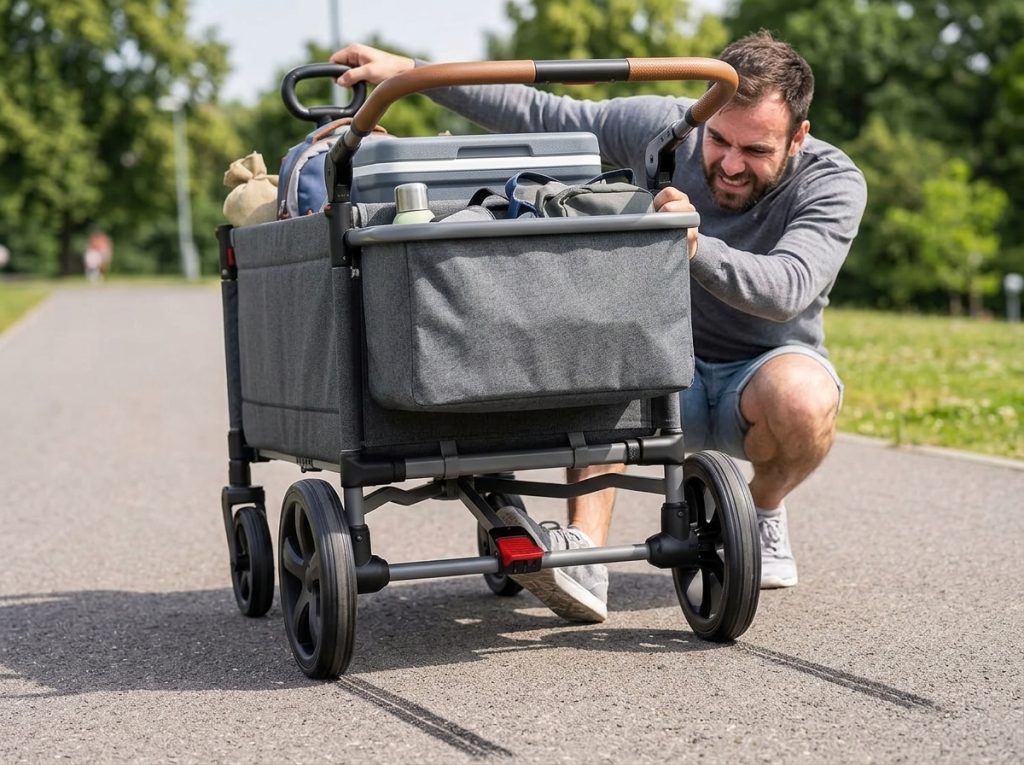
One pedal in the center of the rear axle controls both wheels. Testing found it stiff to engage and just as stiff to release, and the rear storage basket blocks the pedal from view while pushing, so you’re operating it by feel. In a loaded downhill stop test, the brake did engage, but the wagon skidded several feet before it actually came to a stop rather than catching immediately.
That’s a more serious finding than a squeaky wheel or a stiff zipper. It doesn’t mean the brake is unsafe to use — it caught, eventually — but it means testing it firmly, more than once, before relying on it near any kind of slope is a reasonable precaution rather than overcaution.
Storage is a real strength
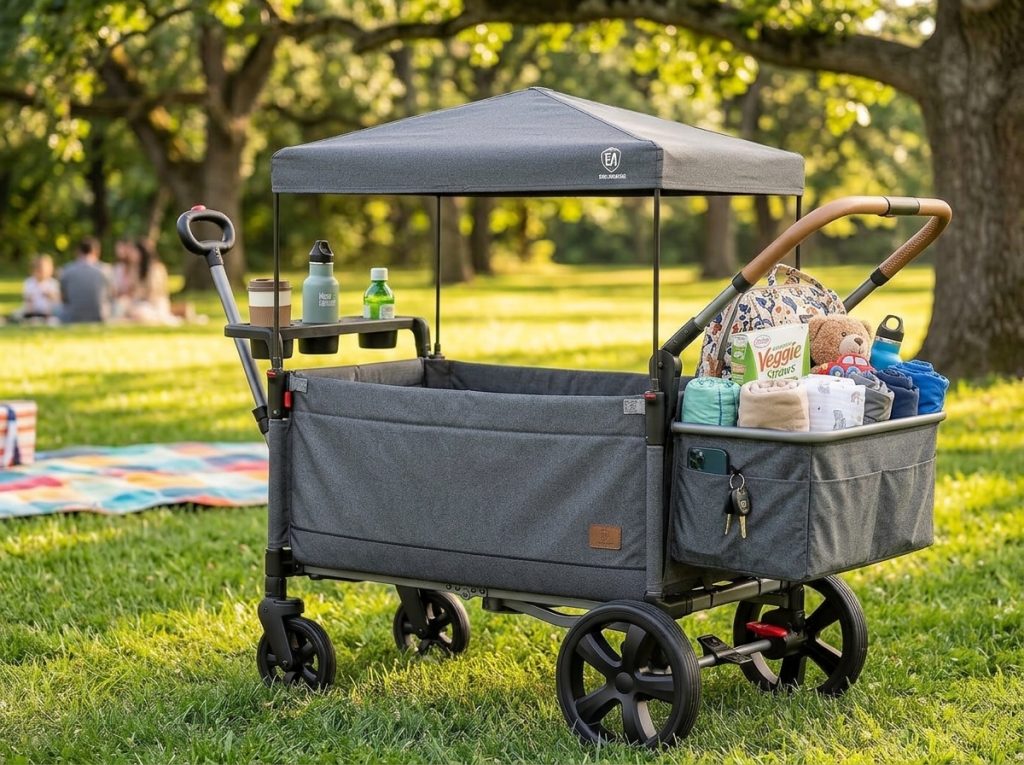
The rear basket, hanging under the handle, measures 14.5 by 7 inches and comfortably held a mostly-stuffed backpack in testing — enough for a diaper bag and then some. Up front there’s a fabric cup holder for the parent and a second pocket with a split opening, designed so you can pull wipes or napkins out without removing the whole container. Storage scored well above the WonderFold W1 and the wagon’s own predecessor in side-by-side testing, landing closer to what pricier wagons like the Jeep Wrangler or Keenz 7S offer.
What’s missing: any cup holder or snack tray for the kids themselves. The original Ever Advanced wagon had one. This version doesn’t, and it’s a real step back for anyone whose kids expect a spot for a snack cup on the ride.
Seating: functional, flat, and not built for small kids to see out
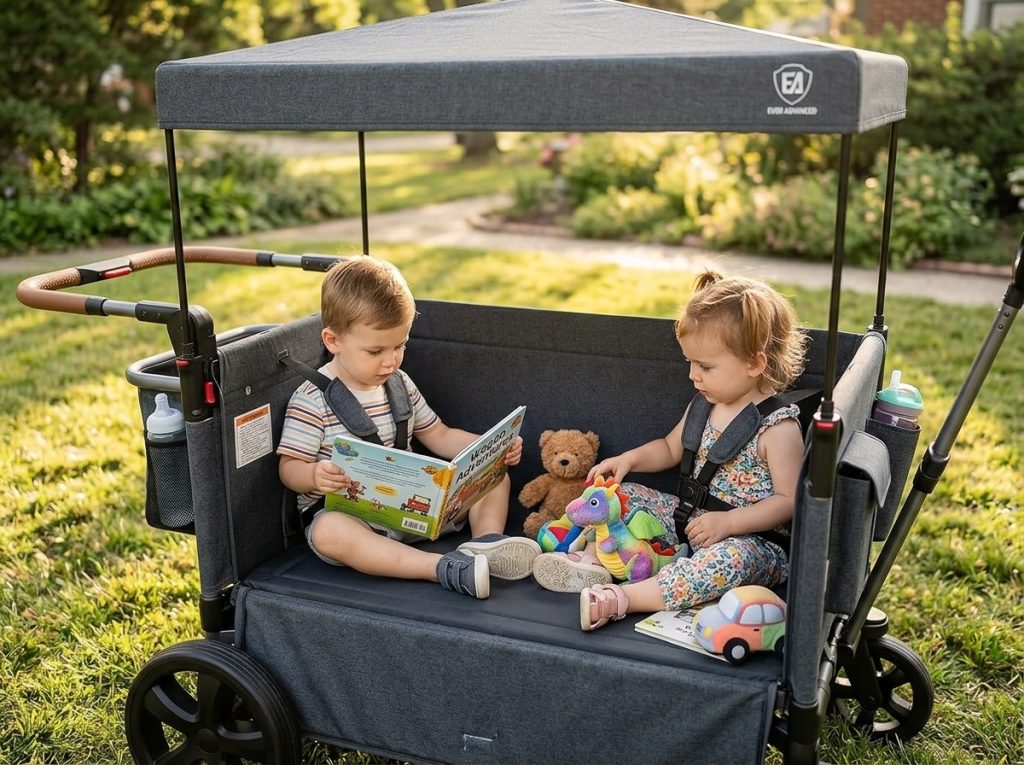
Kids sit facing each other, bottoms on the padded wagon floor, backs against the fabric walls, legs stretched out — no footwell, no shaped seat. That’s less comfortable than wagons built with a proper seat pocket, but it does make a genuinely good flat surface for napping or for kids who’d rather move around and play than sit still.
The wagon’s sides run 14 inches high, which is enough that smaller kids buckled in can’t see out over the top — worth knowing if your child gets fussy without a view. The 5-point harness straps are soft and padded, with removable pads if they bother a sensitive kid. The buckle itself was flagged in testing as unusually stiff — hard to snap open one-handed — and its four clips don’t reliably stay paired together, meaning you’re often reassembling them by hand before every single clip-in.
Common questions, checked against real testing
Here’s how the wagon’s known weak points held up under actual hands-on testing, rather than just going by the spec sheet or marketing copy.
| Question | What testing found |
| Is the canopy really that annoying? | Confirmed — poles need practice to seat correctly, fabric needs re-tugging, poles pop out of mounts on their own |
| Does the side-unzip bench actually hold up? | Yes — functioned reliably through repeated testing, not a one-time gimmick |
| Is the brake safe on hills? | Caution warranted — engaged in a downhill stop test but let the wagon skid several feet first |
| Does it fit in a small car? | Yes — smallest folded size of any wagon tested, fit easily in a Civic trunk and a minivan |
| Is storage actually good? | Yes — rated well above the WonderFold W1 and the original Ever Advanced, close to premium-tier wagons |
| Do kids get a cup holder? | No — the original Ever Advanced had one, this version doesn’t |
| Is the harness buckle easy to use? | No — rated unusually stiff, one-handed operation is difficult |
| Does it handle rough terrain? | Better than expected given standard wheel size — one of the stronger performers on bumps and rocks |
What we couldn’t confirm
Testing included emailing the customer service address listed in the manual to check response time. No reply came back. That’s one data point, not a guarantee of how every support request goes, but it’s worth factoring in if you’re the type of buyer who wants confidence that a company will answer if something goes wrong.
Side-Unzip vs. the original Ever Advanced
This is the direct upgrade path, and the tradeoffs are specific. The Side-Unzip adds the bench-entry feature and a genuinely larger rear basket — the original didn’t have a basket like this at all. It’s about 2 pounds heavier as a result. It loses the snack tray and kid cup holders the original included. The handle mechanism, which had real reliability problems on the original version, tested clean and reliable on the Side-Unzip. The canopy frustration didn’t improve at all between versions, despite marketing language suggesting a redesign. On rough terrain, the Side-Unzip performed better, largely due to stronger wheel and suspension performance.
Side-Unzip vs. the WonderFold W1
Both sit in the budget tier of this category, both use flat, floor-level seating, and both skip raised benches or side-entry doors you’d find on pricier models — well, the Side-Unzip has its own version of a side entry, just not the same mechanism as WonderFold’s zippered kid entrance on its W2 and W4 lines. Compared directly, our WonderFold W1 review found a wagon that’s easier to turn but harder to fold small, with noticeably worse storage and a brake that at least catches faster than this one’s did in downhill testing. The Side-Unzip wins on folded size and storage volume; the W1 wins on ease of turning and overall push effort.
Who should buy this
Families who prioritize trunk space above almost everything else — this is one of the smallest-folding wagons on the market — and who like the idea of kids climbing in and out on their own rather than being lifted. Good fit for households without a garage, or anyone regularly loading the wagon into a smaller car. If you’re weighing this against a double stroller instead, our double stroller vs. wagon guide covers that bigger decision first.
Skip it if kid cup holders or a snack tray are non-negotiable, if you want a canopy you’re not fighting with every time you set up, or if you’re leaning heavily on the brake for hills and slopes regularly — the downhill stop test result is worth sitting with, not brushing past. If you’re still deciding whether a wagon makes sense for your family before comparing specific models, our guide on whether a stroller wagon is worth it is the better starting point, and our best stroller wagons for toddlers roundup covers more ground if this one doesn’t end up being the right fit.

The fold and the storage are the real reasons to buy this wagon. The brake and the canopy are the reasons to hesitate. Both of those things can be true at once.
Related guides & reviews
Radio Flyer Odyssey Stroll ‘N Wagon Review (2026)
The Odyssey is Radio Flyer’s push-pull wagon built for two kids sitting bench-style rather than in individual bucket…
Momcozy ChangeGo Review (2026): Can It Really Replace a Stroller & Wagon?
Quick clarification before anything else, because this trips people up when they land here from a wagon search:…
Evenflo Shyft Rideshare All-Terrain Performance Stroller Wagon Review (2026)
The Shyft Rideshare is a genuinely capable 2-kid, all-terrain wagon with real suspension and urethane wheels that hold…
WonderFold VW4 Volkswagen Special Edition Review (2026)
If you just want the short answer: the VW4 is a genuine WonderFold W4 Luxe underneath a Volkswagen…